Artificial intelligence is rapidly transforming how we approach research. This guide delves into the practical application of AI for summarizing research papers, offering a comprehensive overview of the process from initial input to final evaluation. Understanding the nuances of AI summarization techniques is crucial for effectively extracting key information and ensuring accuracy.
The guide covers various AI models, summarization techniques, and data preparation strategies, enabling users to effectively leverage AI tools for research paper analysis. It also details the crucial steps involved in evaluating the quality of AI-generated summaries and tailoring them to specific research needs.
Introduction to AI-Assisted Summarization
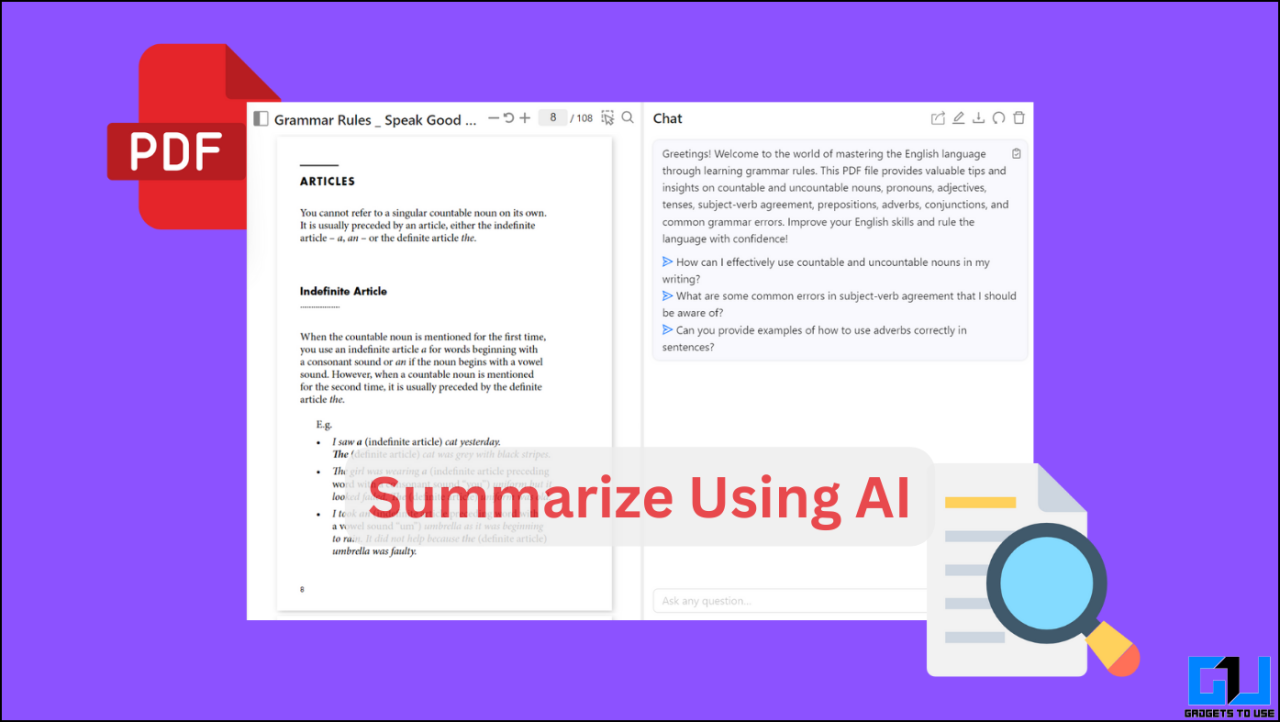
Artificial intelligence (AI) is rapidly transforming various fields, and research paper summarization is no exception. AI-powered tools offer a powerful means to condense extensive research documents into concise summaries, enabling researchers to quickly grasp key findings and insights. This approach can significantly streamline the research process, facilitating quicker knowledge dissemination and collaboration.AI models leverage sophisticated natural language processing (NLP) techniques to understand the semantic meaning of text, extract crucial information, and synthesize it into a coherent summary.
This automated approach can be particularly valuable for researchers facing a deluge of publications, helping them to prioritize and focus on relevant material. However, it’s crucial to recognize the limitations of these tools and the importance of human oversight.
AI Model Types for Summarization
Different AI models employ varying approaches to summarize research papers. Understanding these diverse methods can help researchers choose the most suitable tool for their specific needs. The selection of the most appropriate model often hinges on the nature of the research topic and the specific summarization requirements.
- Extractive Summarization: This approach identifies and extracts the most important sentences and phrases from the original text to create a summary. It’s generally faster and simpler to implement than abstractive methods. However, the resulting summary may lack coherence and sometimes miss crucial relationships between different parts of the original text.
- Abstractive Summarization: This method goes beyond simply extracting sentences; it attempts to understand the meaning of the text and then rephrase it into a concise summary. Abstractive summarization can produce more natural-sounding summaries, but it can be more computationally expensive and may introduce inaccuracies or biases if the model hasn’t been sufficiently trained.
- Hybrid Summarization: Combining elements of both extractive and abstractive methods, this approach attempts to balance the strengths of each. A hybrid approach can yield a summary that captures the essence of the original text while maintaining a reasonable level of efficiency. This method often delivers a higher quality summary compared to pure extractive summarization, with improved coherence and conciseness.
Nuances of Research Papers and AI Tools
Research papers often employ specialized terminology and complex structures. AI models need to be trained on a diverse range of research papers to effectively understand and represent the nuances of these texts. Failing to adequately address this can lead to summaries that are inaccurate, incomplete, or fail to capture the core arguments and findings of the original research.
Furthermore, the quality of the summary depends heavily on the quality of the input text. Poorly written or ambiguous research papers may yield similarly poor summaries.
Comparison of AI Models
The table below provides a comparison of different AI models used for summarizing research papers, highlighting their approaches, strengths, and weaknesses.
| Model Name | Approach | Strengths | Weaknesses |
|---|---|---|---|
| BERT-based Extractive Summarizer | Extracts key sentences based on contextual understanding using BERT embeddings. | Fast and relatively efficient, good for large-scale summarization tasks. | May lack coherence and fluency; can miss nuanced relationships in the text. |
| Transformer-based Abstractive Summarizer | Generates a new summary by understanding the meaning of the input text and rephrasing it. | Produces more natural-sounding summaries, often capturing the core arguments and findings. | Computationally intensive; potential for introducing inaccuracies or biases if not well-trained. |
| Hybrid Model (e.g., Extractive-Abstractive) | Combines extractive and abstractive techniques to balance speed and quality. | Often provides a good balance between speed and accuracy, producing summaries with improved coherence and conciseness. | May require more complex architecture and training data compared to pure extractive methods. |
AI-Driven Summarization Techniques
AI-powered summarization of research papers is rapidly evolving, offering researchers and scholars efficient access to key insights. These tools leverage sophisticated algorithms and natural language processing (NLP) techniques to distill complex research into concise, accurate summaries. This process not only saves time but also facilitates the identification of crucial information, trends, and potential connections within vast bodies of literature.Various AI techniques are employed for research paper summarization, each with its strengths and limitations.
These techniques range from simple extraction of existing text to more complex abstractive methods that generate new text. Understanding these approaches is critical for selecting the most appropriate technique for a given research context.
Extractive Summarization
Extractive summarization methods select and combine existing sentences from the original research paper to create a summary. This approach is often favored for its simplicity and speed. It directly utilizes the author’s own words and avoids the potential for introducing bias or inaccuracies inherent in abstractive methods. Key elements of extractive methods include sentence scoring and selection.
Algorithms often employ techniques like TF-IDF (Term Frequency-Inverse Document Frequency) to assess the importance of sentences in the context of the entire paper.
Abstractive Summarization
Abstractive summarization techniques go beyond simply selecting sentences; they generate entirely new text by understanding the meaning of the input. This approach can provide more concise and insightful summaries by capturing the essence of the paper. However, it relies on complex NLP models and poses a higher risk of introducing inaccuracies or misunderstandings. This method attempts to rephrase and condense the core arguments, findings, and conclusions.
Natural Language Processing (NLP) in Summarization
NLP plays a crucial role in AI-driven summarization by enabling the computer to understand the nuances of human language. Techniques like part-of-speech tagging, named entity recognition, and semantic analysis are integral to comprehending the meaning and relationships within the research paper. These processes allow the AI to identify key concepts, arguments, and conclusions, ultimately leading to a more effective summary.
Examples of NLP Techniques
Specific NLP techniques used in research paper summarization include:
- Part-of-speech tagging: Identifying words as nouns, verbs, adjectives, etc., to understand sentence structure and relationships.
- Named entity recognition: Identifying and classifying named entities (people, organizations, locations) to highlight key actors and contexts.
- Semantic role labeling: Understanding the roles of entities in a sentence to uncover relationships and causality.
- Sentiment analysis: Determining the emotional tone or opinion expressed in the text to understand author perspectives.
AI Summarization Methods and Applications
| Method | Description | Applicability |
|---|---|---|
| Extractive Summarization | Selects and combines existing sentences from the original text. | Suitable for summarizing papers with clearly defined key points and arguments. |
| Abstractive Summarization | Generates new text by understanding the meaning of the input. | Beneficial for complex papers requiring a concise representation of nuanced arguments and findings. |
| Hybrid Summarization | Combines extractive and abstractive techniques to leverage the strengths of both approaches. | Provides a balance between conciseness and accuracy for a wide range of research papers. |
Evaluating AI-Generated Summaries
Assessing the quality of AI-generated summaries is crucial for ensuring their reliability and usefulness. This involves understanding the metrics used to evaluate accuracy, comprehensiveness, and suitability for specific tasks. Evaluating AI-generated summaries is a vital step in ensuring their reliability and practical application.Accurate and comprehensive summaries are essential for researchers to quickly grasp the key findings of a paper.
Inaccurate or incomplete summaries can lead to misinterpretations and hinder the research process. The appropriateness of an AI-generated summary hinges on its ability to meet the specific needs of the user.
Metrics for Assessing Accuracy
Evaluating the accuracy of AI-generated summaries requires the use of appropriate metrics. Accuracy in this context refers to the faithfulness of the summary to the original text. Comparing the AI-generated summary to human-generated summaries or expert annotations is a common approach.
- Precision: Precision measures the proportion of correctly identified key concepts in the summary relative to the total number of concepts in the summary. A higher precision score indicates a more accurate summary. For example, if a summary correctly identifies 8 out of 10 key concepts, the precision is 80%.
- Recall: Recall measures the proportion of correctly identified key concepts in the summary relative to the total number of key concepts in the original research paper. A higher recall score suggests the summary captures a larger portion of the original content. For instance, if a summary correctly identifies 9 out of 12 key concepts in the original paper, the recall is 75%.
Assessing Comprehensiveness
Determining the comprehensiveness of an AI-generated summary involves evaluating its ability to cover the key aspects of the original research paper. A comprehensive summary effectively captures the core arguments, findings, and conclusions.
- Coverage: This metric assesses the extent to which the AI summary encompasses all significant elements of the original paper. A comprehensive summary adequately represents the main ideas and key findings. A low coverage score might indicate an omission of important information.
- F1-Score: This metric is a balance between precision and recall, offering a single score that reflects the overall accuracy and comprehensiveness. A higher F1-score indicates a more balanced and accurate summary.
Suitability for Intended Use Cases
Determining whether an AI summary is suitable for a specific use case requires considering the intended audience and purpose. A summary suitable for a general audience might differ significantly from one tailored for expert researchers.
- Relevance to the Use Case: The summary should directly address the specific needs and questions of the user. A summary for a literature review would require different features than a summary for a quick overview. For instance, a summary for a literature review needs to identify relationships between various studies, whereas a summary for a quick overview should be concise and provide the main conclusions.
- Readability and Clarity: The summary should be easy to understand and follow. Technical jargon should be explained when necessary, ensuring clarity for a diverse audience. Poor readability can hinder comprehension and affect the utility of the summary.
Examples of Evaluation Metrics
Various evaluation metrics are employed to assess the quality of AI-generated summaries. These metrics provide a quantitative measure of the summary’s accuracy, comprehensiveness, and suitability for different use cases.
| Metric Name | Description | How to Use |
|---|---|---|
| Precision | Proportion of correctly identified concepts in the summary. | Compare the summary’s concepts to the original paper’s concepts. |
| Recall | Proportion of original concepts correctly identified in the summary. | Compare the summary’s concepts to the original paper’s concepts. |
| F1-Score | Harmonic mean of precision and recall, balancing both. | Calculate both precision and recall, then compute the F1-score. |
| Coverage | Extent to which the summary encompasses all significant elements. | Assess whether all major points and findings are covered. |
Using AI for Specific Research Paper Tasks
AI tools offer powerful capabilities for extracting specific information from research papers, going beyond general summaries. This targeted approach allows researchers to quickly identify key findings, methodologies, or other crucial elements for their specific needs. The ability to customize AI summaries for various purposes and audiences enhances their utility in academic research and beyond.
Identifying Key Findings
AI can efficiently pinpoint the core contributions and conclusions of a research paper. By analyzing the text, AI can identify key findings, experimental results, and the implications of the study. This process leverages natural language processing (NLP) techniques to understand the context and significance of the presented information. The identified findings can then be further analyzed and used for various research tasks, such as literature reviews, hypothesis development, or meta-analysis.
For example, AI can be used to quickly determine the overall impact of a study on a specific field, or identify specific findings that align with a particular research question.
Extracting Methodologies
AI can also extract detailed information about the research methodologies employed in a paper. This includes the experimental design, data collection techniques, and statistical analyses. This feature is particularly useful for researchers seeking to replicate studies or compare different approaches. The AI tool can provide a structured summary of the methodology, enabling quick understanding and comparison across various studies.
This extracted information can also be used for method evaluation, improving the reproducibility of research.
Creating Targeted Summaries
AI tools allow for the creation of summaries tailored to specific needs or research questions. By providing specific s, concepts, or research goals, the AI can generate a summary focused on the aspects most relevant to the user’s inquiry. This approach is highly effective for quickly understanding complex papers and identifying crucial details within a limited timeframe. For instance, a researcher investigating a specific treatment for a disease can ask the AI to focus on the methods used to assess treatment efficacy.
Customizing AI Summaries for Different Purposes
AI summaries can be customized for various purposes, from academic reviews to general understanding. For academic reviews, summaries should include detailed analysis and critical evaluation. For general understanding, summaries should prioritize clarity and accessibility. The level of detail and the specific focus of the summary can be adjusted based on the intended use. For instance, a general audience might appreciate a summary that focuses on the key results and their implications in plain language, while an academic audience might require a more detailed and nuanced summary.
Tailoring AI-Generated Summaries to Suit the Audience
Tailoring AI-generated summaries to the specific audience is crucial for effective communication. Understanding the audience’s background knowledge and expectations allows for the generation of a summary that is both informative and accessible. For example, a summary for a group of experts will require a more technical and detailed approach, while a summary for a general public audience might focus on simple explanations and implications.
This targeted approach helps in ensuring the summary is well-received and understood by the intended recipients.
Table: AI Summary Customization Examples
| Use Case | Input | Desired Output |
|---|---|---|
| Academic Review | Research paper on cancer treatment, s: efficacy, side effects, cost-effectiveness | Detailed summary focusing on the study’s methodology, statistical analysis of treatment efficacy and side effects, and cost-benefit analysis. |
| General Understanding | Research paper on climate change, target audience: general public | Summary explaining the key findings of the study in simple language, highlighting the impacts of climate change and potential solutions. |
| Replication Study | Research paper on a new method for image recognition, specific need: step-by-step methodology | Detailed breakdown of the image recognition method, including data collection procedures, algorithms used, and experimental setup. |
Integrating AI into Research Workflow
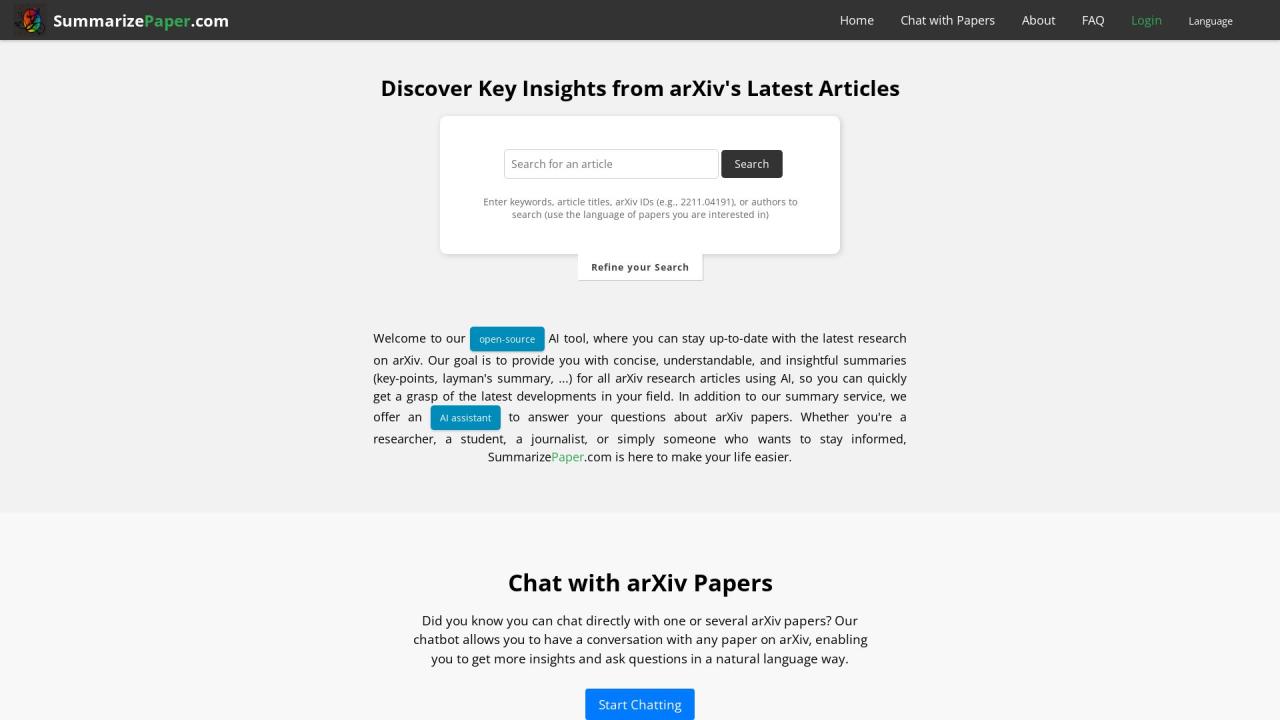
Integrating AI tools into the research workflow presents a significant opportunity to streamline processes, enhance collaboration, and accelerate the discovery of knowledge. By automating repetitive tasks and providing insights from vast datasets, AI can free researchers to focus on more complex and creative aspects of their work. This improved efficiency and enhanced collaboration can ultimately lead to more impactful research outcomes.This section details the steps involved in integrating AI tools for research paper summarization into a research workflow, illustrating how these tools can automate parts of the process, facilitate collaboration, and ultimately lead to a more productive research environment.
Examples of suitable AI tools are provided, along with a flowchart demonstrating the practical application of these steps.
Steps in Integrating AI Tools
Integrating AI into a research workflow typically involves a phased approach. This phased approach ensures a smooth transition and optimal utilization of AI tools. The initial steps are crucial for defining the scope and ensuring the AI tools effectively support the specific research objectives.
- Define Research Objectives and Scope: Clearly articulating the research objectives and scope is paramount to successful AI integration. This includes identifying specific research questions, target datasets, and desired outcomes. This process involves selecting relevant AI tools and tailoring their functionality to match the research objectives. For instance, a study focused on summarizing medical research might benefit from AI tools designed for medical terminology, while a social science study might require tools adept at handling qualitative data.
- Select and Evaluate AI Tools: A critical step involves researching and evaluating various AI tools available for summarization tasks. This includes examining features, capabilities, and potential limitations. Consider factors such as accuracy, reliability, cost, and ease of use when making your choice. The evaluation should include testing with representative samples of research papers.
- Data Preparation and Preprocessing: AI models require well-structured and clean data. This stage involves formatting the research papers into a suitable format for the chosen AI tool. Preprocessing may include removing irrelevant content, handling different formats, and translating texts if necessary. This ensures the AI model can effectively process the data.
- Integration into Workflow: This involves integrating the AI summarization tool into the existing research workflow. This could involve creating scripts, developing custom interfaces, or using pre-built APIs. The specific integration method depends on the chosen tool and the research team’s technical expertise.
- Testing and Refinement: Thorough testing of the AI-generated summaries is essential. This stage involves evaluating the accuracy, completeness, and clarity of the summaries against the original research papers. Refining the AI tool or workflow is necessary to ensure the summaries meet the research team’s requirements.
- Continuous Monitoring and Evaluation: Ongoing monitoring and evaluation are crucial to ensure the AI tool continues to provide high-quality summaries. Regular assessments of performance and adjustments to the workflow are necessary to maintain the quality and efficiency of the AI-assisted summarization process.
Examples of AI Tools
Several AI tools can assist in research paper summarization. These tools vary in their functionalities and capabilities.
- Google AI Summarization API: This API provides a comprehensive suite of tools for text summarization. It is suitable for a broad range of research topics and offers various summarization modes.
- OpenAI’s GPT-3 series: This powerful language model can generate summaries, but requires specific prompt engineering for optimal results. It can handle complex summarization tasks, including the extraction of key insights.
- Hugging Face Transformers: This platform offers a wide selection of pre-trained models, including those specifically designed for summarization. Its flexibility allows researchers to customize models and adapt them to particular research domains.
Automation of Research Tasks
AI tools can automate various aspects of the research process. This automation can significantly reduce the time and effort required for research.
- Data Collection and Organization: AI can be utilized to automatically gather research papers from diverse sources, organize them based on specific criteria, and extract key information.
- Comparative Analysis: AI tools can be employed to compare summaries from various sources and highlight similarities and differences, saving time for researchers to focus on more in-depth analysis.
Collaboration and Knowledge Sharing
AI-powered summarization tools can facilitate collaboration and knowledge sharing among researchers. This can be achieved by creating shared repositories of summaries and providing a common platform for discussions.
- Centralized Knowledge Base: AI can help build a centralized knowledge base of summaries, allowing researchers to easily access and share information.
Flowchart: Integrating AI for Research Paper Summarization
[A visual flowchart, not implemented here, would depict the steps above in a graphical format. It would start with “Define Research Objectives” and follow the steps listed above, ending with “Continuous Monitoring and Evaluation”.]
Wrap-Up
In conclusion, this guide provides a detailed roadmap for using AI to summarize research papers efficiently and effectively. By understanding the diverse AI models, summarization techniques, and evaluation metrics, researchers can streamline their workflow and access valuable insights quickly and accurately. The practical examples and detailed explanations will empower users to integrate AI into their research practices, ultimately enhancing productivity and knowledge sharing.