Unlocking the potential of artificial intelligence for physics education is a transformative approach to learning. This guide explores how AI can enhance the study of physics, from foundational concepts to complex theories. We’ll delve into the practical applications of AI tools, personalized learning experiences, and the creation of engaging simulations to make physics more accessible and understandable.
The increasing sophistication of AI algorithms allows for personalized learning pathways, adapting to individual student needs and learning styles. This tailored approach, coupled with AI-driven simulations, can lead to a deeper understanding of fundamental physics principles. Furthermore, AI facilitates data analysis and interpretation, allowing for a richer and more insightful learning experience.
Introduction to AI in Physics Learning

Artificial intelligence (AI) is rapidly transforming various fields, and physics education is no exception. AI’s ability to process vast amounts of data, identify patterns, and generate predictions offers exciting opportunities to enhance the learning experience and deepen understanding of complex physical concepts. This approach can personalize learning pathways, provide tailored feedback, and facilitate problem-solving in ways that traditional methods often cannot.The application of AI in physics education extends across different learning stages.
From introducing fundamental concepts to tackling advanced theories, AI can provide invaluable support, addressing the unique challenges and opportunities at each level. This personalized approach to learning can lead to a more engaging and effective educational experience for students.
AI-Enhanced Learning in Physics
AI’s potential in physics education stems from its ability to analyze and process data at a scale that surpasses human capabilities. This allows for the development of personalized learning paths, adaptive feedback systems, and sophisticated problem-solving tools. These technologies can provide a more effective learning environment for students by addressing individual needs and strengths.
Benefits of AI in Different Physics Learning Stages
AI can significantly enhance learning at all levels of physics education. For introductory concepts, AI can provide interactive simulations and visualizations that make abstract ideas more tangible. For instance, AI-powered simulations of planetary motion can allow students to explore the effects of varying initial conditions, gaining a deeper understanding of orbital mechanics. In more advanced theories, AI can assist with complex calculations and provide insights into intricate phenomena, such as those in quantum mechanics.
Illustrative Example of AI in Problem Solving
Consider a physics problem involving projectile motion. A student might struggle with the interplay of horizontal and vertical components of velocity. An AI-powered tutoring system could identify the specific concept where the student is struggling. It could then present a tailored sequence of interactive exercises, gradually guiding the student towards a correct solution. For example, the AI might first present a simple problem involving only vertical motion, then progressively introduce horizontal motion, eventually culminating in a comprehensive projectile motion problem.
The AI system can provide immediate feedback, highlighting areas where the student needs to focus their attention.
Comparison of Traditional and AI-Assisted Physics Learning
| Feature | Traditional Methods | AI-Assisted Methods |
|---|---|---|
| Learning Pace | Generally fixed for the entire class | Adaptive, adjusting to individual student needs and progress |
| Feedback Mechanism | Limited, often delayed, and generalized | Immediate, personalized, and focused on specific areas of difficulty |
| Problem-Solving Support | Limited, often relying on textbooks and worked examples | Comprehensive, offering hints, step-by-step solutions, and alternative approaches |
| Accessibility | Dependent on physical resources and instructor availability | 24/7 accessibility, offering flexibility in learning |
| Strengths | Allows for direct interaction with the instructor, fostering a deeper understanding through discussions | Personalized learning experience, tailored feedback, and comprehensive problem-solving support |
| Weaknesses | Can be challenging to cater to individual learning styles and pace, limited in offering individualized feedback and solutions | Potential for over-reliance on AI, may not replicate the social aspect of learning in a classroom |
AI Tools for Problem Solving

AI tools are rapidly transforming the landscape of physics problem-solving. They offer powerful capabilities for calculations, simulations, and data analysis, enabling researchers and students to tackle complex problems more efficiently and effectively. This section explores the various AI tools available and demonstrates their applications in physics.
Types of AI Tools
Various AI tools can be employed to assist in physics problem-solving. These tools leverage different AI techniques, such as machine learning and deep learning, to address specific needs. The choice of tool depends on the nature of the problem and the desired outcome.
- Machine Learning Algorithms: Machine learning algorithms excel at pattern recognition and prediction. They can be trained on large datasets of physics problems and solutions to identify patterns and generate solutions for new problems. For instance, a machine learning model could be trained on a dataset of projectile motion problems to predict the trajectory of a projectile given specific initial conditions.
This capability is particularly useful for problems involving complex equations and numerous variables.
- Deep Learning Models: Deep learning models, particularly neural networks, are adept at handling complex data and extracting intricate patterns. They can be used for simulations, predicting outcomes, and identifying subtle trends in experimental data. For example, in electromagnetism, a deep learning model can be trained on data from various electromagnetic phenomena to accurately predict the behavior of electromagnetic fields under different conditions.
- AI-powered Computational Tools: Specialized computational tools integrate AI algorithms to streamline the solution process. These tools can automate calculations, provide numerical solutions to complex equations, and perform data analysis efficiently. For example, an AI-enhanced computational tool can tackle problems involving intricate differential equations that arise in fluid dynamics or astrophysics.
AI Assistance in Calculations
AI tools can automate and expedite complex calculations, freeing up human resources for more strategic tasks. They can handle extensive numerical computations with greater accuracy and speed. For example, an AI-driven tool can be utilized to compute the trajectory of a satellite orbiting Earth with high precision by solving complex differential equations.
AI Assistance in Simulations
AI can create simulations of physical phenomena that are difficult or impossible to replicate in real-world settings. AI-driven simulations can be used to model the behavior of particles in a plasma, the evolution of a star, or the interactions between molecules in a chemical reaction. Such simulations provide insights into complex systems and processes.
AI Assistance in Data Analysis
AI excels at analyzing vast datasets of experimental or observational data. These tools can identify trends, patterns, and anomalies in data that might be missed by human analysis. For example, in particle physics, AI can be used to sift through enormous amounts of experimental data to pinpoint rare events or new particles.
Accuracy and Reliability
The accuracy and reliability of AI-driven solutions depend heavily on the quality and comprehensiveness of the training data. If the training data is incomplete or biased, the AI model’s predictions might be inaccurate or unreliable. Thorough validation and testing are crucial to ensure the reliability of AI-driven solutions in physics contexts.
Examples of Applications
AI tools have various applications in physics problem-solving.
- Projectile Motion: AI can predict the trajectory of a projectile based on initial conditions, such as velocity and angle, accounting for air resistance and other factors. This is useful in applications like artillery targeting and sports analytics.
- Electromagnetism: AI can simulate the behavior of electromagnetic fields in complex configurations, aiding in the design of antennas, transformers, and other electromagnetic devices.
- Quantum Mechanics: AI can be used to analyze and predict quantum phenomena, such as the behavior of electrons in atoms or the interactions between particles in high-energy collisions.
AI Tools and Applications Table
| AI Tool Type | Application in Physics |
|---|---|
| Machine Learning Algorithms | Predicting trajectories, identifying patterns in experimental data |
| Deep Learning Models | Simulating complex systems, analyzing large datasets |
| AI-powered Computational Tools | Automating calculations, solving differential equations |
Personalized Learning Experiences

AI-powered personalized learning platforms can significantly enhance the physics learning experience for students. By tailoring the learning process to individual needs, strengths, and weaknesses, AI can optimize knowledge acquisition and improve overall comprehension. This approach fosters a more engaging and effective learning environment.Personalized learning goes beyond simply adjusting the difficulty of problems. It involves dynamically adapting the entire learning trajectory to accommodate individual learning styles and paces, providing targeted feedback, and proactively addressing potential misconceptions.
This dynamic approach empowers students to learn at their own optimal pace, leading to greater mastery of the subject matter.
Identifying and Addressing Student Needs
AI systems can meticulously analyze student performance data, including problem-solving strategies, test scores, and engagement levels. This analysis allows for the identification of individual learning styles and the pinpointing of areas where students may be struggling. This process goes beyond simple assessment; it involves understanding the underlying reasons for any observed difficulties.
Adapting to Diverse Learning Styles and Paces
AI algorithms can adapt to various learning styles, such as visual, auditory, and kinesthetic. For example, a student who learns best through visual aids might be presented with interactive simulations and diagrams, while another who prefers auditory learning might be provided with audio explanations and lectures. The platform can adjust the pacing of the learning materials based on the student’s progress and understanding.
This allows for a more effective and engaging learning experience for all students.
Providing Targeted Feedback and Customized Learning Resources
AI-driven feedback mechanisms offer specific and actionable insights to students. Instead of simply providing a correct/incorrect response, AI can explain the underlying principles or concepts that led to the error, guiding the student towards a deeper understanding. Customized learning resources, such as supplementary videos, interactive exercises, and practice problems, can be presented based on the student’s specific needs.
This targeted approach ensures that students receive the support they need to overcome challenges and consolidate their understanding.
Addressing Student Misconceptions in Physics
AI systems can identify and address common misconceptions in physics. Through the analysis of student responses and problem-solving strategies, the AI can pinpoint areas where students are developing inaccurate mental models. The system can then proactively offer corrective feedback, explanations, and additional learning resources tailored to the specific misconception. For instance, if a student consistently misinterprets the concept of acceleration, the AI can provide interactive simulations illustrating the relationship between velocity, acceleration, and time, and recommend targeted practice problems.
Creating Individualized Learning Pathways
A structured method for creating individualized learning pathways using AI involves these key steps:
- Data Collection: Gather comprehensive data on student performance, learning styles, and engagement levels.
- Analysis and Diagnosis: Analyze the collected data to identify areas of strength and weakness, learning styles, and potential misconceptions.
- Pathways Creation: Develop customized learning pathways based on the identified needs, incorporating appropriate learning materials, activities, and resources.
- Dynamic Adaptation: Continuously monitor student progress and adapt the learning pathway as needed to ensure optimal learning outcomes.
- Evaluation and Refinement: Regularly evaluate the effectiveness of the learning pathway and make necessary adjustments to improve its efficacy.
This structured approach ensures that each student receives a personalized learning experience that is tailored to their specific needs and learning style. This methodology is crucial for fostering a more effective and engaging learning environment.
AI-Driven Simulations and Visualizations
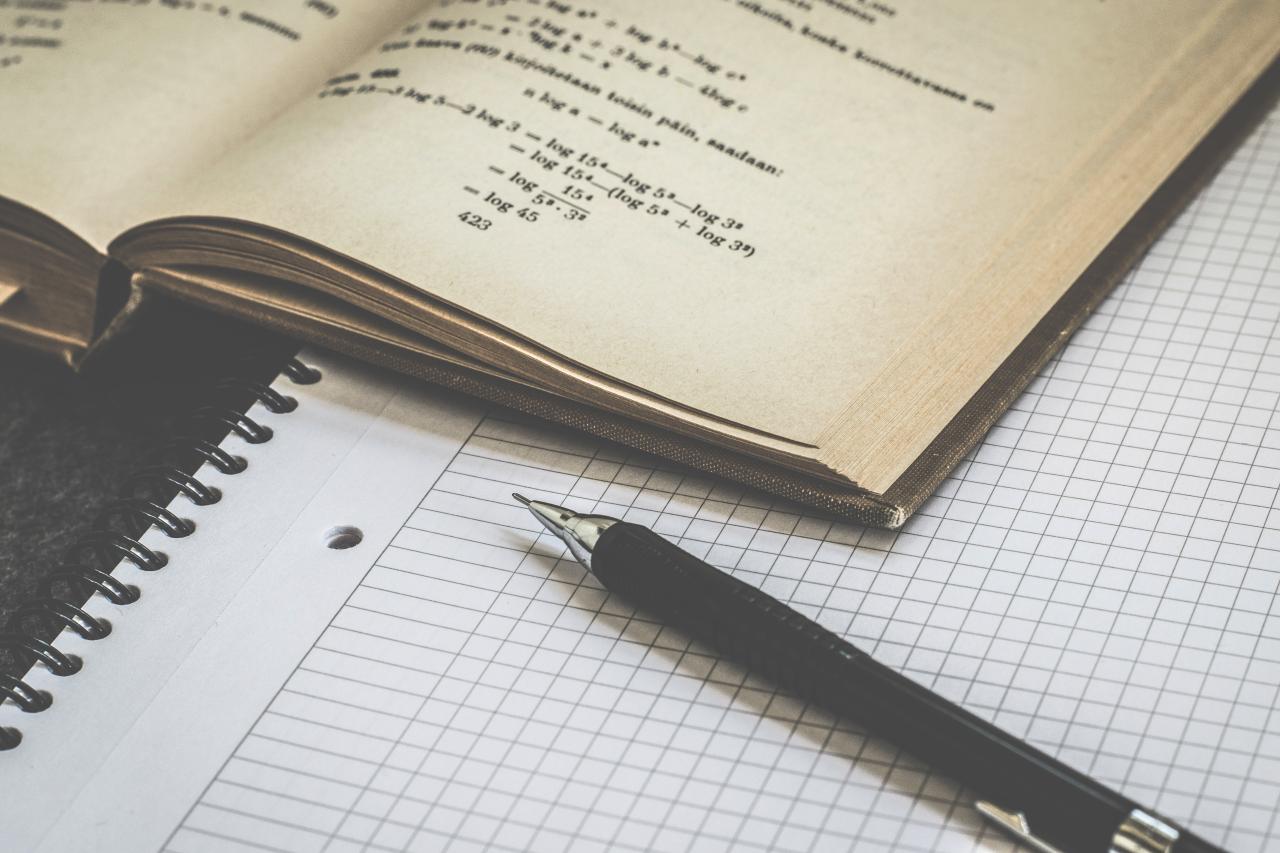
AI is revolutionizing physics education by enabling more realistic and engaging simulations and visualizations. These tools can transform abstract concepts into tangible experiences, fostering a deeper understanding of complex phenomena. By leveraging sophisticated algorithms, AI can generate highly detailed simulations, allowing learners to manipulate variables and observe the effects in real-time. This dynamic approach can significantly enhance comprehension and retention compared to traditional methods.AI-powered simulations and visualizations are invaluable tools for exploring physics concepts that are difficult to visualize or experiment with in a traditional laboratory setting.
They empower students to actively engage with the material, facilitating a more intuitive and comprehensive grasp of the underlying principles. Moreover, the interactive nature of these tools allows for personalized learning experiences, tailoring the level of complexity and detail to individual needs.
Realistic Physics Simulations
AI excels at creating realistic simulations by leveraging machine learning algorithms to model physical systems. These models can incorporate complex interactions and dependencies, resulting in simulations that mirror real-world scenarios with remarkable accuracy. For example, simulations of planetary motion can now account for gravitational perturbations from multiple bodies, providing a far more accurate representation than simpler models. The ability to adjust parameters and observe the consequences in real-time offers a powerful tool for exploring the intricacies of physical systems.
Enhanced Visualization Techniques
AI can enhance visualization techniques to make complex physics concepts more accessible. Advanced algorithms can generate dynamic and interactive visualizations that illustrate subtle phenomena, like wave interference patterns or quantum mechanical probability distributions. These visualizations are often accompanied by intuitive controls, allowing learners to adjust parameters and observe the resulting changes in real-time. The ability to manipulate these visualizations promotes a deeper understanding of the underlying principles.
AI-Powered Simulation Platforms
Several AI-powered simulation platforms are emerging, each with unique strengths in physics education. Some platforms focus on interactive visualization of classic mechanics problems, while others specialize in modelling complex quantum systems. Choosing the appropriate platform depends on the specific educational goals and the complexity of the concepts being explored. A comparison of these platforms would highlight their strengths in terms of visualization capabilities, the complexity of the simulations they can handle, and the user interface design.
Examples of Simulations
Examples of simulations that utilize AI to visualize physics concepts include:
- Planetary Motion: Simulations can model the orbits of planets around stars, incorporating the effects of gravity and perturbations from other planets. The ability to adjust initial conditions and observe the long-term behavior of the system provides a compelling demonstration of the laws of motion.
- Wave Phenomena: Simulations can visualize wave interference patterns, demonstrating the superposition principle and the formation of standing waves. Adjusting the frequency and amplitude of the waves allows learners to explore wave interactions in a dynamic manner.
- Quantum Mechanics: Simulations can illustrate quantum phenomena such as the particle-wave duality or the behavior of electrons in atoms. These simulations often employ advanced visualization techniques to represent probability distributions and quantum states, helping students grasp these challenging concepts.
Benefits and Limitations of AI-Driven Simulations
| Benefit | Limitation |
|---|---|
| Enhanced visualization and understanding of complex concepts | Potential for oversimplification or misrepresentation of complex phenomena if not carefully implemented |
| Interactive learning experiences that cater to individual needs | High computational cost, potentially requiring specialized hardware or software |
| Realistic simulations that mimic real-world scenarios | Difficulty in accurately modeling extremely complex systems |
| Exploration of concepts through experimentation and manipulation | Requires a solid understanding of the underlying physics principles |
AI for Conceptual Understanding
AI possesses the potential to significantly enhance the way students grasp fundamental physics concepts. By leveraging sophisticated algorithms and vast datasets, AI tools can provide personalized explanations, tailored visualizations, and interactive simulations that facilitate a deeper understanding of abstract ideas. This approach transcends rote memorization, fostering a more intuitive and engaging learning experience.
AI-Driven Models
AI can construct various models to illuminate complex physics principles. These models go beyond simple definitions, offering intricate explanations, and connecting concepts through diverse analogies and real-world examples. By presenting multiple perspectives and interpretations, AI can help students develop a more comprehensive understanding. This multi-faceted approach caters to different learning styles and promotes critical thinking.
Bridging the Gap Between Abstract Concepts and Applications
AI can effectively bridge the gap between abstract physics concepts and their practical applications. By connecting theoretical frameworks with real-world scenarios, AI can illustrate how these concepts manifest in everyday life. This approach makes physics less abstract and more relatable, thereby improving student engagement and retention. Students can see the tangible outcomes of the principles they learn, making the subject matter more meaningful.
Examples of AI-Enhanced Conceptual Understanding
AI can offer insightful explanations for intricate concepts like relativity and quantum mechanics. For instance, in explaining relativity, AI can illustrate the effects of time dilation and length contraction through interactive simulations. These simulations allow students to experiment with different scenarios and visualize the consequences of these concepts in action. In quantum mechanics, AI can offer explanations of wave-particle duality, superposition, and entanglement through engaging animations and interactive visualizations.
This approach helps demystify complex ideas and makes them accessible to a wider audience.
AI Explanation of Relativity
“Imagine two observers, one stationary and one moving at a constant velocity. If they both observe a light pulse, the moving observer will perceive the light as traveling at the same speed, regardless of their relative motion. This seemingly paradoxical result leads to the concept of spacetime, where time and space are intertwined and relative to the observer’s frame of reference.”
AI for Data Analysis and Interpretation
AI is revolutionizing the field of physics by enabling sophisticated analysis of vast experimental datasets. Its ability to identify intricate patterns and trends within complex data empowers physicists to gain deeper insights and accelerate scientific discovery. This capability is particularly crucial in contemporary physics, where experiments often generate enormous quantities of data that would be nearly impossible to process manually.The application of AI to data analysis extends beyond simply processing numbers.
It allows for the interpretation of complex experimental results, facilitating the formulation of more accurate models and theories. This interpretive power is vital for drawing meaningful conclusions from intricate experimental setups, including those involving high-energy particle collisions or astronomical observations.
Analysis of Large Datasets
AI algorithms excel at handling the sheer volume of data produced by modern physics experiments. Techniques like machine learning can efficiently sift through terabytes of information, identifying relevant data points and filtering out noise. This capability is crucial for tasks such as identifying particle tracks in high-energy physics experiments or classifying astronomical objects in large surveys. The speed and efficiency of AI algorithms are essential for analyzing the vast amounts of data generated by these experiments.
Interpretation of Complex Experimental Data
AI can significantly aid in interpreting complex experimental data. By identifying correlations and patterns, AI can suggest potential relationships between different variables that might not be immediately apparent to human analysts. For example, in analyzing data from a particle collider, AI could identify subtle correlations between particle decay products, which might point to new fundamental interactions. This interpretation goes beyond simple number crunching and can provide valuable insights into the underlying physics.
Identification of Patterns and Trends
AI algorithms are adept at discovering patterns and trends in physics data. This capability is particularly useful for identifying anomalies or unexpected behaviors in experimental results. For instance, in analyzing astronomical observations, AI could detect unusual patterns in the movement of celestial bodies that might indicate the presence of unseen gravitational forces or undiscovered exoplanets. AI’s ability to spot these patterns significantly speeds up the process of scientific discovery.
Examples of AI in Physics Data Analysis
AI is already being used in a variety of physics experiments. In high-energy physics, AI algorithms are employed to identify particle tracks in detectors. In astrophysics, AI is being used to classify galaxies and other astronomical objects. Furthermore, in condensed matter physics, AI can analyze data from complex materials to predict their properties. These applications demonstrate the increasing role of AI in facilitating data-driven discoveries across various subfields of physics.
Table of AI Data Analysis Tasks
| Data Analysis Task | AI Method | Example Application |
|---|---|---|
| Identifying particle tracks | Convolutional Neural Networks (CNNs) | High-energy physics experiments |
| Classifying astronomical objects | Support Vector Machines (SVMs) | Galaxy surveys |
| Predicting material properties | Machine Learning Models (e.g., Random Forest) | Condensed matter physics |
| Detecting anomalies in data | Anomaly Detection Algorithms | Identifying unexpected patterns in astronomical data |
| Extracting features from images | Deep Learning Models | Analyzing images from telescopes |
Ethical Considerations of AI in Physics Education

Integrating AI into physics education presents exciting opportunities, but also necessitates careful consideration of ethical implications. Ensuring fairness, transparency, and accountability in AI-driven learning systems is crucial for fostering equitable and beneficial learning experiences for all students. This section delves into the ethical considerations surrounding the use of AI in physics education, highlighting potential biases and the critical role of human oversight.AI-powered tools can significantly enhance the learning experience, but potential biases within the algorithms can inadvertently perpetuate existing inequalities.
Addressing these biases is paramount to fostering a truly inclusive and equitable learning environment. The responsibility of ensuring responsible AI implementation in physics education lies with educators, developers, and policymakers.
Potential Ethical Concerns
AI systems in physics education, while offering personalized learning paths and sophisticated problem-solving tools, can also present potential ethical concerns. These concerns encompass issues of fairness, transparency, and accountability, which must be carefully addressed to avoid unintended consequences. Data privacy, algorithmic bias, and the potential for over-reliance on AI tools are crucial areas of consideration.
Ensuring Fairness, Transparency, and Accountability
Fairness in AI-driven learning systems demands that the algorithms treat all students equitably, regardless of background or ability. Transparency in these systems is vital for understanding how AI algorithms make decisions about learning paths and assessments. Accountability mechanisms are essential for addressing potential issues and ensuring the responsible use of AI in physics education. For instance, detailed explanations of AI-generated feedback and assessment criteria are crucial.
Addressing Potential Biases in AI Algorithms
AI algorithms are trained on data, and if that data reflects existing societal biases, the algorithms can perpetuate these biases. For example, if a dataset predominantly represents students from certain socioeconomic backgrounds or geographic regions, the algorithm may favor those students’ learning styles and problem-solving approaches. Therefore, careful selection and preprocessing of training data are critical for minimizing bias.
Furthermore, ongoing monitoring and evaluation of AI systems are essential for identifying and mitigating bias as it arises. Continuous review and refinement of algorithms are necessary to ensure equitable outcomes.
The Role of Human Oversight
Human oversight remains essential in complementing AI-driven learning approaches. AI should not replace human teachers, but rather serve as a powerful tool to enhance and personalize their teaching strategies. Educators should guide students in utilizing AI tools effectively and critically evaluate the output generated by these systems. Furthermore, human judgment is crucial in evaluating student understanding and providing personalized feedback that complements AI-generated results.
This human touch ensures that the AI tools are used effectively and ethically.
Evaluating the Impact of AI on Student Learning and Well-being
Evaluation of AI’s impact on student learning and well-being is paramount. Metrics should go beyond traditional academic measures, considering factors such as student engagement, motivation, and overall well-being. For example, measures of student anxiety or frustration with AI tools can provide valuable insights into the system’s effectiveness and areas needing improvement. Furthermore, qualitative feedback from students and teachers can provide valuable insights into the human element of the learning experience.
Last Point
In conclusion, this exploration of AI in physics education highlights the transformative potential of technology in the learning process. By combining AI tools with personalized learning, engaging simulations, and data analysis capabilities, we can create a more effective and enriching physics education experience for students. The ethical considerations of AI integration are also crucial, ensuring fairness, transparency, and accountability in these systems.