In today’s fast-paced world, concise communication is paramount. This guide provides a comprehensive approach to effectively condensing lengthy documents into impactful summaries. We’ll explore various techniques, utilizing the power of Artificial Intelligence to streamline the process and ensure clarity.
This in-depth exploration will cover crucial aspects, from identifying key information to employing AI tools for summarization. We’ll present practical strategies and examples to facilitate the efficient reduction of substantial texts while maintaining accuracy and impact.
Understanding the Task
Condensing a 5,000-word document into a 500-word summary requires a strategic approach that combines understanding, extraction, and synthesis. This process is not simply about cutting and pasting; it involves identifying the core arguments, key supporting details, and overarching themes. A well-executed summary captures the essence of the original text while maintaining clarity and conciseness.Effective summarization relies on the ability to discern essential information from extraneous details.
This involves critical thinking, recognizing patterns, and understanding the relationships between different parts of the document. The goal is to create a concise, accurate representation of the original content, avoiding distortion or misrepresentation of the author’s ideas.
Process of Condensing
The process of condensing a 5,000-word document into a 500-word summary involves several key steps. Each step is crucial for maintaining accuracy and achieving a concise representation of the original content.
- Thorough Reading and Comprehension: Carefully read the entire document to grasp the main arguments, supporting evidence, and overall structure. Understanding the context is paramount for accurate summarization.
- Identifying Key Themes and Arguments: Highlight the main points and arguments presented in the document. Note the supporting evidence and examples used to reinforce these points. This step requires active engagement with the material to identify core concepts and arguments.
- Outlining the Structure: Create a concise Artikel of the document, focusing on the logical flow of ideas. Identify the introduction, body paragraphs, and conclusion, noting the relationships between different sections. This will help you organize the summary in a logical sequence.
- Extracting Key Supporting Details: Select the most relevant supporting details and evidence that support the key themes and arguments. Avoid including unnecessary or repetitive information. Focus on the strongest evidence to maintain the integrity of the summary.
- Synthesizing Information: Combine the extracted key points and supporting details into a coherent narrative. This involves restating the author’s main arguments using your own words, ensuring clarity and conciseness. This is where the art of summarization lies.
- Drafting the Summary: Craft a concise and accurate summary based on the Artikel and synthesized information. Maintain the original meaning and tone while reducing the word count significantly.
- Review and Revision: Carefully review the summary for accuracy, clarity, and conciseness. Ensure that the summary accurately reflects the original content and effectively captures the main ideas. Make necessary revisions to improve the overall quality.
Common Pitfalls to Avoid
Several common errors can hinder the process of summarizing. Understanding these pitfalls will help you produce a more effective summary.
- Ignoring the Structure: Summarizing without understanding the overall structure of the document can lead to a disorganized and illogical summary. A clear understanding of the document’s organization is vital.
- Oversimplification: Overly simplifying complex ideas can distort the author’s intended meaning. Avoid sacrificing accuracy for brevity.
- Including Irrelevant Details: Including details that do not directly support the main arguments weakens the summary and detracts from the core message. Focus on the essential information.
- Failure to Synthesize: Simply listing the main points without connecting them in a logical way creates a fragmented summary. Connecting the ideas is essential for creating a coherent narrative.
Identifying Key Information
Pinpointing the most crucial information in a lengthy document is a critical skill for effective summarization. This process involves moving beyond a simple reading of the text and actively seeking out the core ideas and supporting evidence. Understanding how to identify key information is vital for condensing 5,000 words into a concise 500-word summary. The strategies Artikeld below will guide you through this process.
Analyzing Paragraph Structure
Effective summarization begins with a thorough understanding of the text’s structure. Each paragraph serves a specific purpose within the larger argument. Identifying the main claim of each paragraph is essential. This often involves recognizing the topic sentence, which frequently appears at the beginning or near the beginning of the paragraph. By identifying the core idea, the supporting details become clearer.
This allows for a more precise understanding of the relationship between different points within the text.
Extracting the Essence of Each Paragraph
The essence of each paragraph lies in the main idea, supported by details and evidence. To extract this essence, consider the following steps:
- Identify the topic sentence: Locate the sentence that encapsulates the central point of the paragraph. This sentence often presents the main argument or a key point in support of the overall thesis.
- Highlight supporting details: Note any specific examples, data, or evidence that strengthens the topic sentence. These details provide context and backing for the main idea.
- Summarize the paragraph: Craft a concise summary that captures the essence of the paragraph’s content, using the topic sentence and supporting details as a foundation. Avoid including unnecessary details or redundancies.
Prioritizing Crucial Details
Determining the relative importance of different pieces of information is vital. Crucial details are those that directly support the main argument, advance the central theme, or offer significant evidence. Supporting information, while relevant, may not be as essential to the overall message.
- Identify the main argument: Determine the primary thesis or argument being presented in the text. This understanding forms the basis for identifying information crucial to the argument.
- Focus on direct support: Look for information directly supporting the main argument. Examples, data, and evidence that strengthen the main claim are crucial to include in the summary.
- Eliminate redundant or tangential details: Supporting information that does not directly contribute to the main argument or the central theme can be omitted. This helps ensure conciseness and focus in the summary.
Identifying Themes and Overarching Ideas
Themes and overarching ideas often run through the entire document, providing context and connecting various points. Identifying these patterns helps to pinpoint the core message.
- Analyze the progression of ideas: Note how the ideas evolve throughout the text. Are there recurring themes or patterns in the arguments?
- Search for recurring concepts: Identify key concepts, arguments, or examples that appear multiple times. These recurring elements often highlight important themes.
- Extract the main thesis: Establish the main argument or central thesis of the text. Themes are usually directly or indirectly connected to the main thesis.
Recognizing Recurring Arguments and Supporting Evidence
Recurring arguments and supporting evidence are essential indicators of key information. These patterns highlight the author’s central claims and provide supporting evidence.
- Look for repeated arguments: Identify arguments that appear frequently throughout the document. These recurring arguments often represent the core claims.
- Analyze supporting evidence: Note the evidence used to support recurring arguments. The nature and frequency of the evidence indicate its importance.
- Identify the relationship between arguments and evidence: Understanding how arguments are supported by evidence helps to isolate crucial information.
Methods for Condensation
Condensing a 5,000-word document to 500 words requires strategic application of various techniques. A crucial aspect of this process is understanding which parts of the original text contain the most important information and which can be safely eliminated. This often involves identifying key arguments, supporting evidence, and conclusions. The techniques discussed below can assist in achieving this goal.Effective condensation is not just about reducing word count, but about retaining the core message and meaning of the original document.
This requires careful selection and rephrasing of information, ensuring that the essence of the original text remains intact. Maintaining accuracy and clarity is paramount in this process.
Paraphrasing
Paraphrasing involves rewriting sentences and passages in your own words while retaining the original meaning. This technique is valuable for clarifying complex ideas and making the condensed text more accessible. Care must be taken to avoid misrepresenting the original author’s intent. A direct quote, carefully selected, can often provide context and strengthen the paraphrase.
Summarizing
Summarizing involves condensing a larger text into a concise overview of the main points. This method focuses on capturing the core arguments, supporting evidence, and conclusions, leaving out less significant details. Effective summarization requires a deep understanding of the text’s structure and the relationships between different ideas.
Extracting Key Points
Extracting key points involves identifying the most crucial information within the text. These points are often the central arguments, supporting evidence, and conclusions. This method is useful for identifying the essence of the original text, and can be used in conjunction with paraphrasing or summarizing. Using s and topic sentences to pinpoint key information is a common practice.
Comparing Summarization Methods
| Method | Strengths | Weaknesses |
|---|---|---|
| Paraphrasing | Preserves original meaning, clarifies complex ideas | Can be time-consuming, requires careful attention to detail |
| Summarizing | Concise, captures core arguments | May lose nuanced details, requires strong understanding of text |
| Extracting Key Points | Identifies essential information | May not fully convey the context, requires understanding of argument structure |
Combining Methods for Optimal Results
A combination of methods often yields the best results. For example, you might extract key points, then paraphrase them to create a concise summary. This approach ensures a comprehensive understanding of the original text while reducing the overall length. A good example is taking a paragraph, identifying its core idea, paraphrasing it, and adding a concise statement about supporting evidence.
Maintaining Original Meaning
Maintaining the original meaning is crucial throughout the condensation process. Avoid altering the author’s intent or introducing biases. Carefully evaluate the text’s structure, identify relationships between ideas, and ensure that the condensed version accurately reflects the original’s core arguments. Using precise language and avoiding ambiguity are essential for accuracy.
Structuring the Concise Text

Creating a well-structured 500-word summary is crucial for effectively conveying the core message of a longer document. A clear and logical structure ensures the reader easily grasps the key concepts and avoids getting lost in the details. This section details a structured approach for condensing a 5,000-word document into a concise and coherent 500-word summary.A well-structured summary not only saves the reader’s time but also highlights the essential information, facilitating quicker understanding and retention.
Employing a logical framework allows for a smooth transition between ideas, reinforcing the summary’s coherence.
Summary Structure Artikel
The structure of the 500-word summary should mirror the original document’s key sections. This maintains the logical flow and ensures that the essence of each part is captured.
- Introduction: Briefly introduce the topic and its significance. State the primary purpose and scope of the original document. This section should highlight the central argument or theme.
- Body Paragraphs: Divide the body into distinct sections that correspond to the main points of the original document. Each section should cover a specific aspect of the topic. For instance, if the original document discusses three main theories, the summary might have three body sections, each focusing on a single theory.
- Supporting Evidence: Summarize the key evidence or arguments supporting each point in the body. Focus on the most compelling and representative examples, avoiding unnecessary details. Choose evidence that clearly reinforces the main point of each section. Use short, impactful sentences or concise phrases to effectively highlight the evidence.
- Analysis and Synthesis: Offer a concise analysis of the evidence presented. Draw connections between the different points and synthesize the key takeaways. This section helps demonstrate the understanding of the relationships between different arguments.
- Conclusion: Summarize the main findings and reiterate the core message. A brief concluding statement solidifies the overall understanding and leaves a lasting impression.
Example Summary Flow
A well-structured summary flows logically from one point to the next. The transition between sections should be smooth, ensuring the reader can follow the progression of ideas without difficulty.
| Original Document Section | Corresponding Summary Section |
|---|---|
| Introduction (Background and Problem Statement) | Introduction (briefly stating the problem and the document’s scope) |
| Section 1 (Theory A) | Body Paragraph 1 (Theory A, summarizing its key components) |
| Section 2 (Evidence supporting Theory A) | Supporting Evidence (summarizing key evidence that supports Theory A) |
| Section 3 (Theory B) | Body Paragraph 2 (Theory B, summarizing its key components) |
| Section 4 (Evidence supporting Theory B) | Supporting Evidence (summarizing key evidence that supports Theory B) |
| Section 5 (Comparison and Synthesis) | Analysis and Synthesis (analyzing the similarities and differences between the theories) |
| Conclusion (Main Findings and Implications) | Conclusion (summarizing the main findings and their implications) |
Maintaining Coherence
Using clear and concise language is paramount. Avoid jargon and overly complex sentences. Use transition words and phrases to connect ideas smoothly. For instance, “Furthermore,” “However,” “In contrast,” and “Similarly” help guide the reader through the summary’s logical progression.
Maintaining Clarity and Conciseness
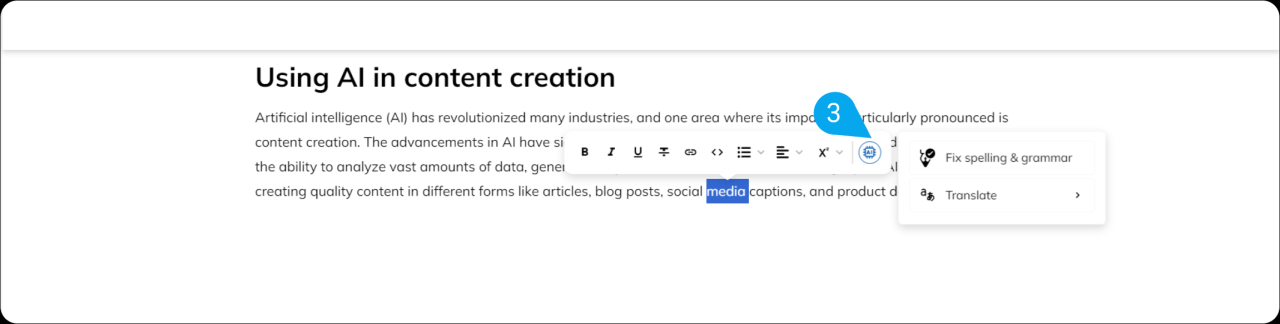
Preserving clarity and conciseness is paramount when condensing a lengthy document. Effective communication hinges on conveying complex ideas with precision and brevity. This involves identifying and removing unnecessary words and phrases, leveraging active voice and strong verbs, and avoiding jargon and technical terms. These techniques are vital for transforming a 5,000-word document into a concise 500-word summary.The core principle is to ensure that every word contributes directly to the understanding and impact of the message.
Redundancy and ambiguity are eliminated, leaving a clear and impactful summary that captures the essence of the original text. The focus shifts from extensive detail to core concepts and supporting arguments.
Expressing Complex Ideas with Brevity and Precision
This necessitates a deep understanding of the original text’s core arguments and supporting evidence. By identifying the central themes and key takeaways, writers can articulate complex ideas with precision and conciseness. A clear understanding of the document’s purpose and target audience is also essential. This ensures the summary aligns with the overall message and the intended audience’s comprehension level.
Eliminating Unnecessary Words and Phrases
Redundant phrases and words diminish the impact of a summary. Identifying and removing these elements is a crucial step. This involves scrutinizing each sentence for unnecessary repetition, clichés, and filler words. Replace wordy phrases with more concise alternatives. For example, “in order to” can often be replaced with “to.”
Using Active Voice and Strong Verbs
Active voice and strong verbs contribute significantly to a summary’s clarity and impact. Passive voice can lead to wordiness and vagueness. Transforming passive sentences into active voice sharpens the message and enhances clarity. Strong verbs convey meaning more forcefully and efficiently than weaker alternatives.
Avoiding Jargon and Technical Terms
Jargon and technical terms can confuse readers unfamiliar with the specific field. When condensing, consider your audience and substitute technical terms with clearer, more accessible language. This improves readability and ensures the summary is comprehensible to a wider range of readers.
Examples of Sentences with and without Unnecessary Words
| Original Sentence (Wordy) | Revised Sentence (Concise) |
|---|---|
| In order to achieve a successful outcome, it is essential to take the necessary steps to implement the strategy effectively. | To succeed, implement the strategy effectively. |
| The primary reason for the decline in sales was due to a lack of effective marketing strategies. | Poor marketing strategies caused sales to decline. |
| It is highly probable that the new regulations will have a significant impact on the industry. | The new regulations will likely significantly impact the industry. |
Using AI Tools for Assistance
AI tools offer powerful assistance in condensing lengthy documents. These tools leverage sophisticated algorithms to analyze text, identify key concepts, and generate concise summaries. Their ability to process large volumes of information rapidly makes them invaluable in today’s information-rich environment.AI summarization tools can significantly reduce the time and effort required to extract key information from extensive documents. By automating the process of identifying key concepts and sentences, AI tools empower users to focus on the core ideas without getting bogged down in extraneous details.
This efficiency translates into substantial time savings, especially when dealing with large datasets or complex topics.
AI Summarization Tool Capabilities
AI tools excel at summarizing text by understanding the relationships between different parts of a document. This enables them to identify the most important information and condense it effectively. They are adept at capturing the essence of a text, eliminating redundancy, and producing a concise, accurate summary. These tools are not just about shortening text; they’re about understanding the context and extracting the most pertinent information.
Comparison of AI Summarization Tools
A variety of AI tools are available for summarizing text, each with its own strengths and weaknesses. The choice of tool depends on the specific needs and requirements of the user. This table Artikels some prominent AI summarization tools and their key characteristics.
| Tool Name | Features | Strengths | Limitations |
|---|---|---|---|
| Google AI Summarization API | Advanced natural language processing, flexible input formats, and integration capabilities. | High accuracy in extracting key information, ability to handle various text formats, strong integration with Google ecosystem. | Potentially higher cost compared to some free options, may require technical expertise for implementation. |
| OpenAI’s GPT-3/4 | Generates human-like text summaries, excels at understanding context and nuance. | Produces highly comprehensive and coherent summaries, adapts well to different writing styles. | Potential for generating inaccurate or misleading summaries if the input text is complex or poorly structured. Cost can be a factor depending on usage. |
| Summarizer.io | Offers a user-friendly interface, various summarization options, and supports different languages. | Simple to use, suitable for general summarization tasks, good for quick summaries. | Limited advanced features, might not perform as well with highly technical or complex documents. |
| Hugging Face Transformers | Wide range of pre-trained models, adaptable to specific needs, and customizable options. | Excellent for specialized summarization tasks, strong community support, flexibility to adjust model parameters. | Requires some technical proficiency to implement and fine-tune, potentially higher learning curve. |
Illustrative Examples
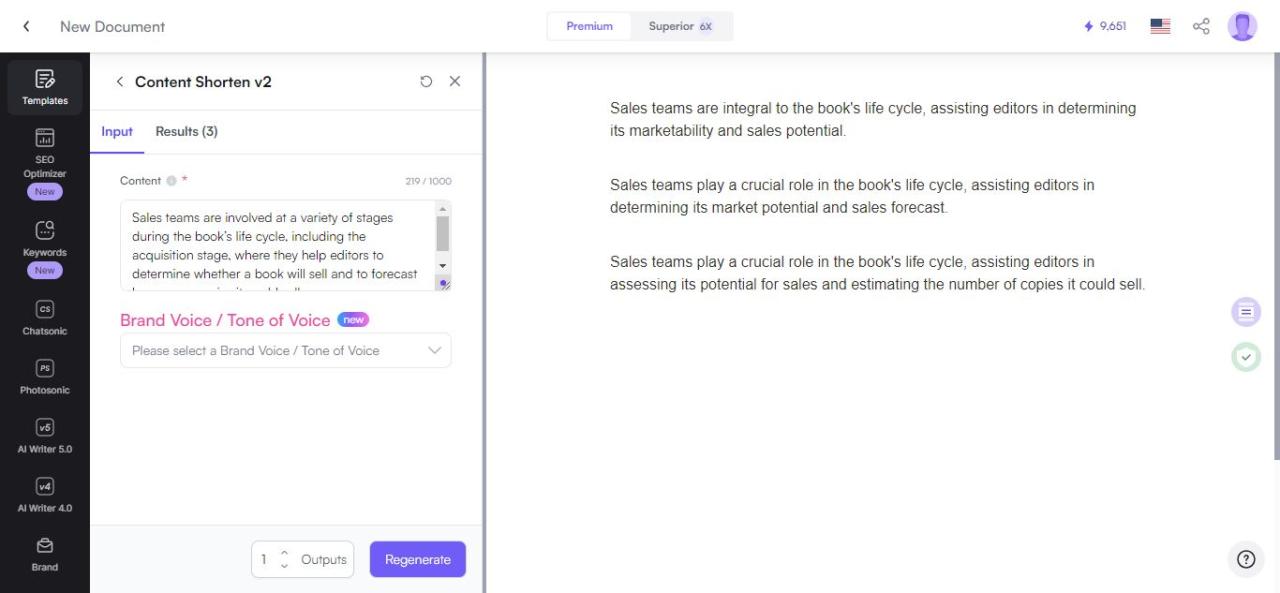
This section provides concrete examples to illustrate the process of condensing lengthy documents using AI summarization techniques. We will examine various types of texts, highlighting key features and arguments, and demonstrating how to extract essential information for a concise summary. By analyzing these examples, readers can gain practical experience in applying the summarization techniques discussed earlier.Effective summarization requires understanding the core arguments and supporting details within a text.
These examples will showcase how to identify the most significant information, prioritize key arguments, and eliminate redundant or less crucial details. The examples demonstrate the application of various condensation techniques and the use of AI tools for optimal results.
Example 1: Research Paper on Climate Change
This example is a research paper analyzing the impact of human activities on global warming. The paper likely presents various perspectives, including historical data, scientific models, and projected future scenarios. Key arguments will likely revolve around the correlation between greenhouse gas emissions and rising temperatures, along with discussions of potential mitigation strategies.The 5,000-word paper might include detailed statistical analyses, case studies of specific regions, and complex scientific models.
A 500-word summary would condense these findings into a concise overview. The summary would emphasize the key findings, such as the significant increase in global temperatures, the projected impact on ecosystems, and the urgent need for global action. The AI summarization tool could be used to extract the key points, identifying the most impactful evidence, and re-presenting it in a streamlined format.
Example 2: Business Case Study on Market Entry
This example is a business case study exploring the viability of entering a new market. It likely details market research, competitive analysis, and financial projections. The core arguments might involve assessing market potential, evaluating competitive landscape, and outlining potential strategies for market penetration.The 5,000-word document might contain detailed consumer surveys, competitor profiles, financial forecasts, and strategic plans. A 500-word summary would need to identify the most important conclusions and recommendations.
This includes highlighting the overall market attractiveness, the competitive threats and advantages, and the projected profitability of the new market entry. The AI summarization process could help to focus on the key financial metrics, identify critical market trends, and suggest optimal strategies, making the summary more efficient and insightful.
Example 3: Historical Analysis of a Political Movement
This example is a historical analysis of a specific political movement. The paper likely presents a comprehensive overview of the movement’s origins, development, key figures, and impact. The core arguments may involve understanding the social, economic, and political context of the movement and assessing its historical significance.The 5,000-word paper might include detailed accounts of key events, biographical information about prominent figures, and analysis of the movement’s long-term effects.
A 500-word summary would distill this extensive information into a concise and accurate overview of the movement’s key characteristics and significance. The summarization process would involve identifying the key events and figures, extracting the core arguments about the movement’s impact, and synthesizing this information into a coherent and insightful narrative.
Final Thoughts

This comprehensive guide has illuminated the process of condensing lengthy texts into concise summaries, leveraging the capabilities of AI. By understanding core principles, employing effective techniques, and utilizing available tools, readers can achieve impactful summarization. The practical examples and strategies provided empower users to efficiently shorten their work, maximizing clarity and engagement. We encourage further exploration and experimentation with the methods presented.