Data visualization is transforming how we understand and interact with information. AI is revolutionizing this field, enabling sophisticated and insightful visualizations. This guide delves into the methods, tools, and techniques to effectively visualize data using AI, empowering users to unlock valuable insights from complex datasets.
From simple charts to interactive dashboards, AI can generate and customize visualizations to meet diverse needs. This comprehensive exploration covers everything from fundamental concepts to advanced techniques, offering practical applications and real-world examples. The guide also emphasizes the importance of effective data storytelling and best practices for using AI in data visualization.
Introduction to Data Visualization with AI

Data visualization is the graphical representation of data to communicate insights and patterns effectively. It transforms complex datasets into easily digestible visuals, enabling quicker understanding and decision-making. This process can range from simple charts to intricate interactive dashboards. Crucially, it bridges the gap between raw data and actionable knowledge.AI plays a pivotal role in modern data visualization by automating tasks, enhancing analysis, and uncovering hidden relationships in complex datasets that might otherwise be missed.
Sophisticated algorithms can identify patterns and trends, suggest suitable visualizations, and even create interactive displays tailored to specific user needs. This integration of AI empowers users to extract more value from their data and gain a deeper understanding of the underlying information.
Role of AI in Enhancing Data Visualization
AI significantly enhances data visualization by automating various aspects of the process. AI algorithms can automatically select the most appropriate visualization type for a given dataset, customize visual elements like colors and labels for optimal clarity, and even predict future trends based on existing data patterns. This automated approach allows users to focus on interpreting the insights rather than on the technical aspects of data visualization.
By leveraging AI, users can gain a deeper understanding of their data.
Benefits of Using AI for Data Visualization
The integration of AI in data visualization offers numerous advantages. These benefits include increased efficiency, improved accuracy, and enhanced user experience. AI tools automate the process of creating visualizations, freeing up human analysts to focus on strategic interpretation and decision-making. Furthermore, AI algorithms can detect subtle patterns and outliers in data that might be missed by human observation, leading to more accurate and insightful visualizations.
The end result is a more effective and user-friendly experience for data exploration.
Different Types of Data Visualizations
Visualizations come in diverse forms, each suitable for different types of data and intended outcomes. Charts, graphs, and maps are some common examples, each offering unique ways to present information. Charts, such as bar charts and line graphs, are well-suited for comparing values across categories or tracking changes over time. Graphs, like scatter plots and histograms, are ideal for exploring relationships between variables or examining the distribution of data.
Maps provide a powerful means of visualizing geographical data and identifying spatial patterns.
Strengths and Weaknesses of Visualization Methods
| Visualization Method | Strengths | Weaknesses |
|---|---|---|
| Bar Charts | Excellent for comparing categories, easy to understand. | Limited for showing trends over time. |
| Line Graphs | Effective for showing trends and patterns over time. | Can be cluttered if displaying too many data points. |
| Scatter Plots | Useful for identifying relationships between variables. | Less effective for large datasets; can be hard to interpret complex relationships. |
| Histograms | Illustrate the distribution of data. | Can lose individual data point information. |
| Maps | Effectively show geographical data and patterns. | May not be suitable for data without a strong geographical component. |
This table highlights the advantages and disadvantages of various visualization techniques. Careful consideration of the strengths and weaknesses of each method is crucial for selecting the appropriate visualization for a particular dataset and intended analysis.
AI-Powered Tools for Data Visualization
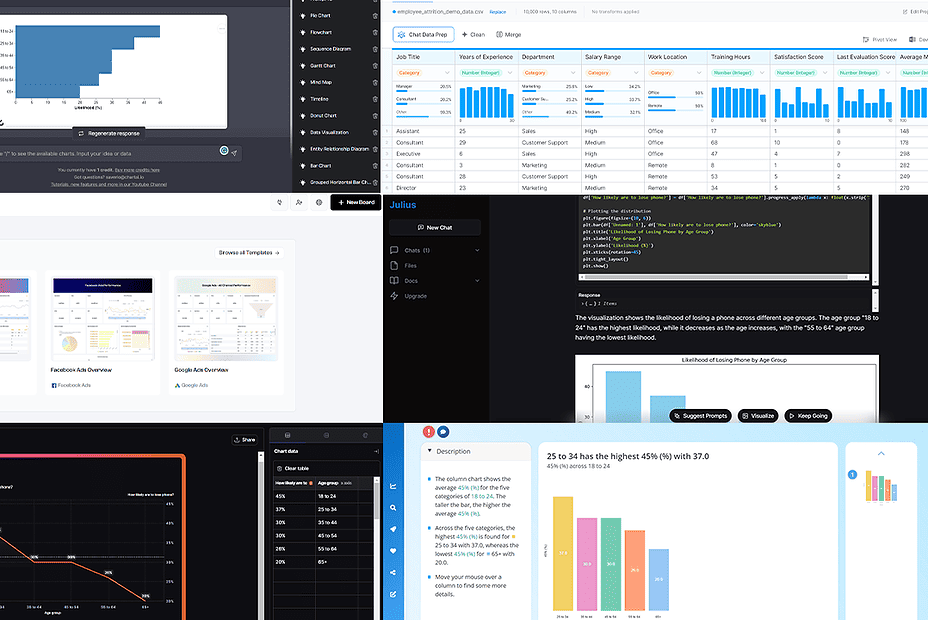
AI-powered tools are revolutionizing data visualization, offering sophisticated methods for transforming raw data into insightful and actionable representations. These tools leverage machine learning algorithms to automatically identify patterns, trends, and outliers, allowing users to quickly gain a deeper understanding of their data. This automated analysis frees up time for more strategic decision-making.Several prominent AI-powered tools facilitate data visualization.
These tools provide a range of features, from automatic chart generation to interactive dashboards, empowering users with innovative visualization techniques. The ease of use and learning curve vary among these tools, but the overall trend is towards user-friendly interfaces and intuitive functionalities.
Popular AI Tools for Data Visualization
Numerous tools leverage AI for data visualization. These tools often incorporate machine learning to automate tasks such as chart selection, data aggregation, and interactive dashboard creation.
- Tableau: Tableau, a widely used business intelligence platform, integrates AI capabilities. It offers features like automatic insights and data preparation to streamline the visualization process. The platform’s interactive dashboards are well-regarded for their ability to quickly reveal key trends and patterns.
- Power BI: Microsoft’s Power BI also includes AI-driven capabilities. Users can leverage features like automatic data insights and predictive modeling to analyze data more effectively. Power BI dashboards are often integrated with other Microsoft products, facilitating seamless data flow.
- Qlik Sense: Qlik Sense is another prominent business intelligence tool. It uses AI to identify patterns and anomalies in data, allowing users to create interactive visualizations to uncover hidden relationships and drive informed decisions. Qlik Sense’s advanced analytics capabilities can be leveraged for forecasting and predictive modeling.
- Datawrapper: Datawrapper is a dedicated tool for creating interactive data visualizations. Its AI-powered features include automatic chart selection and customization, simplifying the process for users who might not have extensive design experience. The platform is ideal for news organizations and data journalists needing to quickly create compelling and informative visuals.
Features and Functionalities
These tools offer diverse functionalities, streamlining the process of data visualization. Specific features and functionalities vary across platforms, but generally include automated chart generation, interactive dashboards, and sophisticated data analysis.
- Automated Chart Selection: Many AI-powered tools automatically suggest the most appropriate chart type for the given data, eliminating the need for manual selection and ensuring optimal visualization. This automated process saves significant time and resources.
- Interactive Dashboards: These tools enable the creation of dynamic dashboards that allow users to explore data interactively. Users can filter, drill down, and explore different aspects of the data through interactive controls, resulting in a deeper understanding of the insights embedded within the data.
- Data Preparation and Cleaning: AI can assist in cleaning and preparing data, which is a crucial initial step in data visualization. This automated data preparation process improves data quality and reliability.
Ease of Use and Learning Curve
The ease of use and learning curve of AI visualization tools differ. While some tools offer intuitive interfaces, others may require more technical expertise.
- Ease of Use: Tools like Datawrapper often prioritize user-friendliness, making data visualization accessible to a broader audience, including those with limited technical backgrounds.
- Learning Curve: Sophisticated tools like Tableau or Power BI may have a steeper learning curve, demanding more technical knowledge to fully leverage their advanced functionalities. However, comprehensive documentation and tutorials often mitigate the difficulty.
Interactive Dashboards: Examples
AI-powered tools facilitate the creation of interactive dashboards that enable users to explore data effectively.
- Sales Performance Dashboard: An interactive dashboard can display sales figures over time, highlighting trends and seasonal variations. Users can filter data by region, product, or sales representative to gain specific insights.
- Customer Behavior Dashboard: A dashboard can visualize customer demographics and purchase patterns. Interactive elements allow for the identification of high-value customers and patterns in customer behavior, which are invaluable for targeted marketing campaigns.
Pricing Models
The pricing models for data visualization tools vary significantly.
| Tool | Pricing Model |
|---|---|
| Tableau | Subscription-based, with varying tiers based on features and user count. |
| Power BI | Subscription-based, offering different plans for individual users and organizations. |
| Qlik Sense | Subscription-based, with various pricing tiers based on the number of users and features. |
| Datawrapper | Freemium model, with basic features available for free and premium features requiring paid subscriptions. |
Techniques for Visualizing Data with AI
AI-powered data visualization tools are transforming how we interact with and understand complex datasets. These tools leverage machine learning algorithms to automatically generate insightful visualizations, enabling faster pattern recognition and decision-making. Beyond basic visualization, AI can enhance clarity and impact, and even anticipate user preferences to tailor the visualization experience.AI algorithms excel at processing large volumes of data, identifying hidden patterns and anomalies, and presenting them in visually compelling ways.
This automated process significantly reduces the time and effort required for manual visualization, freeing up analysts to focus on interpreting the insights gleaned from the data. This efficiency is critical for organizations needing to quickly analyze trends and make data-driven decisions in dynamic environments.
Automatic Visualization Generation
AI algorithms can automatically generate various types of visualizations from raw data, including charts, graphs, and interactive dashboards. These algorithms analyze the data structure, identify relevant variables, and select appropriate visualization types to effectively communicate the insights. This automated process significantly reduces the time and effort required for manual visualization, enabling analysts to focus on the interpretation of the results.
For instance, an AI tool can automatically generate a line graph displaying sales trends over time, highlighting seasonal fluctuations and key growth periods.
Optimization for Clarity and Impact
AI can significantly enhance the clarity and impact of data visualizations. Sophisticated algorithms analyze the data, determine the most effective visual representations, and automatically adjust parameters such as color schemes, font sizes, and layout to maximize understanding and engagement. This optimization process ensures the visualization effectively communicates the key takeaways without overwhelming the viewer with unnecessary information. For example, an AI tool can automatically adjust the color palette in a scatter plot to highlight clusters of data points, making patterns more readily apparent to the user.
Pattern and Anomaly Detection
AI can identify patterns and anomalies within complex datasets through visualization. By analyzing data distributions and identifying outliers, AI tools can highlight potential issues or opportunities. For example, a visualization generated by AI might reveal a sudden spike in customer complaints in a specific region, prompting further investigation into the cause of the problem. This capability enables proactive issue resolution and improved business performance.
AI can also automatically identify and flag data points that deviate significantly from the norm, which might otherwise be overlooked in manual analysis.
Customization Based on User Preferences
AI-powered tools can adapt visualizations based on user preferences and needs. By analyzing user interactions and feedback, these tools can dynamically adjust visualizations to improve clarity and relevance. For instance, if a user frequently interacts with specific parts of a visualization, the AI can highlight those areas in subsequent visualizations to facilitate deeper analysis. Further, AI can adjust the visualization’s complexity based on the user’s role or expertise, ensuring the information is easily digestible.
Choosing Appropriate Visualizations for Different Data Types
Selecting the right visualization for a specific dataset is crucial for effective communication. AI tools can automatically assess the nature of the data (e.g., numerical, categorical, time-series) and suggest the most suitable visualization technique. For example, a bar chart might be recommended for comparing categorical data, while a line graph could be ideal for representing trends over time.
AI can make these recommendations based on the data’s characteristics and the user’s objectives, resulting in visualizations that are more insightful and engaging.
Visualizing Complex Data with AI
Modern datasets often contain intricate relationships and patterns that are difficult to discern visually. Traditional methods struggle to effectively represent the nuances within high-dimensional data. AI-powered techniques offer powerful solutions to these challenges, enabling a deeper understanding of complex datasets.AI simplifies the complexities of data visualization by automating the process of feature extraction, dimensionality reduction, and pattern recognition.
By intelligently analyzing the data, AI algorithms can identify key relationships and trends that might otherwise remain hidden, resulting in more insightful and actionable visualizations.
Challenges of Visualizing Complex Datasets
Complex datasets, often characterized by high dimensionality and intricate relationships, present significant challenges for traditional visualization methods. The sheer volume of data points and the numerous variables can make it difficult to identify meaningful patterns and relationships. Furthermore, the visualization process may require significant computational resources, and the interpretation of complex visualizations can be challenging for non-experts. These limitations can hinder the ability to effectively communicate insights and make informed decisions based on the data.
AI-Powered Simplification of Complex Data
AI algorithms can significantly simplify complex data for easier understanding. Techniques such as dimensionality reduction, often employing algorithms like Principal Component Analysis (PCA), can transform high-dimensional data into a lower-dimensional space while retaining the essential information. Furthermore, AI can automatically identify important features and relationships, highlighting key patterns and trends. This automated process allows analysts to focus on interpreting the insights derived from the visualization, rather than struggling with the complexities of the data itself.
Visualizing High-Dimensional Data
AI excels at visualizing high-dimensional data by reducing the number of variables while preserving essential information. One example involves visualizing customer segmentation data, where numerous factors (age, income, purchase history, etc.) can be reduced to a smaller set of representative variables. This visualization can reveal clusters of customers with similar characteristics, enabling targeted marketing strategies. Another example is in scientific research, where complex data from simulations or experiments can be visualized to reveal hidden patterns and relationships.
Interactive and Dynamic Visualizations
AI can create interactive and dynamic visualizations, allowing users to explore data in a more engaging and insightful manner. Interactive elements, such as zooming, filtering, and highlighting specific data points, can enable users to gain a deeper understanding of the underlying relationships. Furthermore, dynamic visualizations can update in real-time, reflecting changes in the data, allowing users to observe trends as they evolve.
This interactive approach makes the visualization process more engaging and effective.
Interactive 3D Visualizations
AI-powered tools can create interactive 3D visualizations, enabling a more comprehensive understanding of complex data relationships. These visualizations allow users to navigate through the data in multiple dimensions, revealing hidden patterns and relationships that are difficult to discern in 2D representations. Examples include visualizing molecular structures, financial market trends, or urban planning data, where the depth and complexity of the data are best represented in three dimensions.
Data Storytelling with AI-Generated Visualizations
Data visualization, while powerful in conveying information, often falls short in effectively communicating insights and compelling narratives. AI-powered tools, however, can elevate data visualization to a new level, enabling the creation of compelling data stories that resonate with audiences and drive action. By understanding the importance of storytelling and utilizing AI to craft engaging narratives, we can transform raw data into meaningful narratives that inspire understanding and influence decision-making.AI plays a pivotal role in enhancing data storytelling by automating the process of creating visualizations tailored to specific narratives.
This automation allows analysts to focus on the narrative itself, rather than the technical aspects of visualization design. AI can adapt visualizations based on the audience’s needs and preferences, ensuring the message is effectively communicated and understood.
Importance of Data Storytelling
Data storytelling is crucial for translating complex data into understandable and engaging narratives. It helps audiences grasp the significance of the information presented and draw meaningful conclusions. By weaving a compelling narrative around data, we can make complex issues accessible and relatable. Data visualizations are effective tools for communication, but when combined with a narrative, they are even more impactful.
A good story with supporting visuals can evoke emotions, spark curiosity, and ultimately lead to action.
AI’s Role in Crafting Compelling Narratives
AI tools excel in automating the process of crafting compelling narratives through visualizations. These tools can analyze data, identify trends, and suggest visualizations that effectively communicate the key insights. By leveraging machine learning algorithms, AI can anticipate the needs of different audiences and tailor visualizations to their specific preferences. Furthermore, AI can suggest appropriate visualizations based on the type of data and the desired message.
For instance, a scatter plot might be ideal for showcasing correlations, while a bar chart might be better suited for highlighting comparisons.
Examples of Effective Data Storytelling
Effective data storytelling is demonstrated in various fields. In healthcare, AI-generated visualizations can illustrate the correlation between lifestyle choices and disease prevalence, enabling targeted interventions. In business, AI-generated visualizations can showcase sales trends and customer behavior, leading to informed marketing strategies. For example, a visualization showing the decline in customer engagement with a specific product line, accompanied by a narrative explaining the potential reasons, can prompt corrective actions and lead to more profitable decisions.
Visualizing Data for Engaging Presentations
AI-generated visuals can significantly enhance presentations by making them more visually appealing and engaging. Instead of static charts and graphs, AI can create dynamic and interactive visualizations that draw the audience in and maintain their attention. Interactive dashboards and animated charts, generated by AI, can transform data-driven presentations into compelling experiences. AI can also adapt visualizations in real-time based on audience feedback, ensuring the message is effectively communicated.
Incorporating Visualizations into Narratives
| Narrative Element | Visualization Type | Description |
|---|---|---|
| Introduction | Overview chart, infographic | Provide a high-level context and overview of the data. |
| Problem statement | Comparative chart, trend graph | Highlight the key challenges or issues. |
| Proposed solution | Flowchart, process map | Illustrate the solution and its potential impact. |
| Results/Conclusion | Summary chart, interactive dashboard | Present the outcome and provide a clear conclusion. |
AI can assist in the selection of the most appropriate visualization types for each stage of the narrative. By tailoring visualizations to each segment of the story, the message is more effectively conveyed and understood. Visualizations help to emphasize key points and drive the narrative forward.
Best Practices for Using AI in Data Visualization
Leveraging AI for data visualization offers exciting possibilities, but careful consideration of best practices is crucial for effective and meaningful results. This section Artikels key factors to consider when selecting AI tools, creating visualizations, and ensuring the visualizations are accessible, inclusive, and relevant to the intended audience.
Choosing the Right AI Visualization Tool
Selecting an AI-powered visualization tool requires careful evaluation of its capabilities and limitations. Consider factors such as the type of data being visualized, the desired level of customization, and the tool’s integration with existing data systems. The tool should also support the intended analysis and output formats. For example, a tool specializing in time-series analysis might be ideal for tracking sales trends, while a tool with natural language processing capabilities would be beneficial for sentiment analysis of customer feedback.
Creating Effective Visualizations
Effective data visualizations, even with AI assistance, rely on clear communication of insights. Maintain visual clarity by using appropriate chart types, color palettes, and labels. Avoid clutter and unnecessary details. Ensure that the visualization directly answers the questions posed by the data. For example, a scatter plot effectively visualizes relationships between two variables, while a bar chart highlights comparisons across different categories.
Data Cleaning and Preparation
Data cleaning and preparation are fundamental steps in any visualization process, regardless of the tools employed. Incomplete or inconsistent data can lead to misleading or inaccurate insights. Addressing issues like missing values, outliers, and inconsistencies is essential before applying AI for visualization. The quality of the input data directly impacts the reliability of the output. By thoroughly cleaning and preparing data, we ensure a solid foundation for robust analysis and insightful visualizations.
Accessibility and Inclusivity
Accessibility and inclusivity are paramount in data visualization. Ensure visualizations are usable by individuals with disabilities. Use appropriate color palettes that are accessible to colorblind individuals. Provide alternative text descriptions for images to ensure screen readers can interpret them. Consider diverse representations, like different data formats, that cater to different learning styles and perspectives.
Understanding the Audience
Tailoring visualizations to the intended audience is crucial for effective communication. Consider the audience’s background, technical expertise, and interests when selecting visualization techniques and interpreting results. For instance, a visualization intended for business leaders might focus on key performance indicators (KPIs) and trends, while a visualization for researchers might delve deeper into statistical details.
Case Studies of AI-Driven Data Visualization
AI-powered data visualization is rapidly transforming various industries, providing valuable insights and driving data-driven decision-making. This section presents real-world case studies, highlighting the impact of AI on visualization and the benefits it offers. These examples showcase how businesses are leveraging AI to uncover hidden patterns, improve efficiency, and ultimately, achieve better outcomes.
Real-World Applications of AI in Data Visualization
AI is increasingly being integrated into data visualization tools to streamline the process and generate more insightful representations. Companies across diverse sectors are adopting AI-driven visualization techniques to enhance understanding and facilitate decision-making. For example, in finance, AI can automatically generate interactive dashboards that display key performance indicators (KPIs) and highlight potential risks or opportunities.
Impact of AI Visualizations on Decision-Making
AI-driven visualizations can significantly improve the speed and quality of decision-making. By automating the process of data aggregation, cleaning, and visualization, AI allows analysts and decision-makers to focus on the insights derived from the data rather than the technical aspects of data preparation. This acceleration in the analytical process can translate to faster responses to emerging trends and more proactive strategies for mitigating potential risks.
For instance, in the retail industry, AI-powered visualizations can identify trends in customer purchasing behavior, allowing retailers to adjust their inventory levels and marketing strategies in real-time.
Challenges and Solutions in Implementing AI for Visualization
While AI offers numerous benefits, implementing AI-powered visualization tools can present challenges. One key challenge is ensuring the data quality and accuracy. AI models rely heavily on the quality of input data; inaccurate or incomplete data can lead to flawed visualizations and misleading conclusions. Solutions to this problem include rigorous data validation processes and the implementation of data cleaning techniques to improve the reliability of the input data.
Another challenge is ensuring the visualizations are accessible and understandable to all stakeholders. Solutions include providing clear explanations and context within the visualizations, and tailoring the visualizations to the specific needs and expertise of the audience.
Benefits of AI in Data Visualization Across Industries
| Industry | Benefits of AI-Driven Visualization |
|---|---|
| Retail | Real-time identification of sales trends, personalized recommendations, and optimized inventory management. |
| Finance | Automated risk assessment, improved fraud detection, and enhanced portfolio management through dynamic visualizations of market trends. |
| Healthcare | Improved disease diagnosis through pattern recognition in medical images, personalized treatment plans, and optimized resource allocation. |
| Manufacturing | Predictive maintenance, optimized production processes, and real-time quality control through interactive visualizations of machine performance. |
| Transportation | Real-time traffic analysis, optimized route planning, and enhanced safety measures through dynamic visualizations of transportation networks. |
The table above highlights the varied and significant benefits AI-powered visualizations offer to various industries. AI can help businesses across sectors improve efficiency, enhance decision-making, and ultimately achieve better outcomes. The potential applications of AI-driven visualization are vast and continue to expand with the evolution of technology.
Future Trends in AI-Powered Data Visualization
The field of data visualization is rapidly evolving, driven by the increasing sophistication of artificial intelligence (AI). AI is not just automating tasks; it’s fundamentally altering how we perceive and interact with data. This evolution promises a future where data insights are more readily accessible, actionable, and impactful across diverse industries.
Emerging Trends in AI for Data Visualization
AI is transforming data visualization by automating complex tasks, enabling interactive exploration, and fostering more sophisticated data storytelling. Key trends include the use of machine learning algorithms for automatically generating visualizations tailored to specific data characteristics, and the development of more intuitive and user-friendly interfaces. The rise of natural language processing (NLP) allows users to query data and receive visualizations without requiring explicit knowledge of visualization tools.
Furthermore, AI is enabling more sophisticated visualizations, such as interactive 3D models and dynamic dashboards, which allow for a deeper understanding of complex data relationships.
AI-Driven Visualizations for Enhanced User Experience
User interfaces are becoming more intuitive and personalized, driven by AI’s ability to understand user preferences and data needs. This leads to a seamless experience, where users can easily interact with data, discover patterns, and generate insights. For instance, AI can dynamically adjust visualization types and parameters based on user interactions, providing a personalized and efficient exploration experience. Further, the user interface will likely become more conversational, allowing users to interact with data through natural language prompts, accelerating the insight-generation process.
Visualizing Complex Data with Enhanced Detail
AI algorithms can effectively manage the complexity of large and multi-dimensional datasets, producing more informative and accurate visualizations. By identifying key patterns, trends, and anomalies within complex data, AI can reveal hidden relationships that might be missed by traditional methods. This ability is particularly valuable in domains like scientific research, finance, and healthcare, where understanding intricate data relationships is critical.
For example, in genomics research, AI can analyze vast datasets of genetic information to identify correlations between specific genes and diseases, ultimately leading to more effective treatments.
Impact of AI on Various Industries
AI-powered data visualization tools will profoundly impact diverse industries. In the financial sector, AI can automate risk assessments and identify fraud patterns by generating sophisticated visualizations of financial transactions. In healthcare, AI can analyze patient data to visualize trends in disease outbreaks, predict patient outcomes, and personalize treatment plans. The retail sector will gain insights into consumer behavior, enabling them to better understand customer preferences and tailor marketing strategies.
Projected Growth of AI-Driven Visualization Tools
| Category | 2024 (Estimated) | 2028 (Projected) | 2032 (Projected) ||——————-|——————-|——————-|——————-|| Desktop Tools | 100,000 Users | 250,000 Users | 500,000 Users || Cloud-Based Tools | 25,000 Users | 100,000 Users | 250,000 Users || Mobile Apps | 10,000 Users | 25,000 Users | 50,000 Users | Note: These figures are estimations and may vary based on market conditions and technological advancements.
Future Challenges and Opportunities
The adoption of AI-powered data visualization tools will face challenges, including data privacy concerns and the need for skilled professionals capable of interpreting AI-generated visualizations. However, opportunities abound for companies and individuals to leverage AI to gain a deeper understanding of their data and gain a competitive advantage. The ability to extract insights from vast datasets will be paramount for decision-making in various fields.
Furthermore, AI will continue to evolve, leading to even more sophisticated and insightful visualizations.
Last Point
In conclusion, this guide has explored the transformative power of AI in data visualization. By leveraging AI tools and techniques, individuals and organizations can unlock deeper insights, communicate complex information effectively, and make data-driven decisions. The future of data visualization is bright, promising even more innovative and impactful ways to understand and utilize data.