Artificial intelligence is rapidly transforming various fields, and its application to problem-solving in mathematics is no exception. This guide delves into the fascinating world of how AI tackles algebra problems, exploring the techniques, advantages, and limitations of this innovative approach. From simple equations to complex calculations, we’ll illuminate the potential of AI in streamlining algebraic problem-solving, showcasing its capabilities and the processes involved.
This comprehensive exploration will cover the fundamental principles of AI in algebra, examining the different types of algebraic problems AI can solve efficiently. We will also discuss the input and output formats, the advantages and limitations, real-world applications, and practical implementation aspects of using AI tools for algebra problem-solving.
Introduction to AI in Algebra Problem Solving
Artificial intelligence (AI) is rapidly transforming various fields, and algebra problem-solving is no exception. AI systems, particularly those employing machine learning algorithms, can analyze algebraic problems and generate solutions with remarkable speed and accuracy. This approach promises to enhance educational experiences and streamline mathematical processes.AI excels at pattern recognition and logical reasoning, making it a powerful tool for tackling algebraic problems.
By learning from vast datasets of solved algebraic equations, AI systems can identify underlying patterns and relationships, thereby developing effective strategies for solving novel problems.
Types of Algebraic Problems AI Can Tackle
AI systems can effectively address a wide range of algebraic problems. These include solving linear equations, quadratic equations, systems of equations, inequalities, and even more complex polynomial equations. The ability to handle various problem types makes AI a versatile tool in algebraic computations.
Examples of AI Solving Simple Algebraic Equations
Consider the simple linear equation: 2x + 5 =
- An AI system could approach this problem by recognizing the structure of the equation, isolating the variable ‘x’, and performing the necessary arithmetic operations (subtracting 5 from both sides, then dividing both sides by 2) to arrive at the solution: x = 3. Similarly, for a quadratic equation like x 2
- 4x + 3 = 0, the AI could employ various methods, such as factoring or the quadratic formula, to find the solutions. This ability to tackle different types of equations with structured steps makes AI a valuable asset in algebra problem-solving.
Comparison of Traditional and AI-Based Approaches
| Feature | Traditional Methods | AI-Based Approaches |
|---|---|---|
| Problem Solving Strategy | Step-by-step procedures, often relying on memorized formulas and rules. | Pattern recognition, learning from data, and identifying optimal strategies for different types of equations. |
| Error Detection | Manual review and verification by the user. | Automated error checking through the AI’s learning process and internal validation. |
| Speed | Dependent on user’s skill and the complexity of the problem. | Generally faster, especially for complex problems. |
| Flexibility | Limited to the user’s knowledge of different methods. | Adaptive to diverse algebraic problem types and complexities. |
| Efficiency | Can be time-consuming for complex problems. | Potentially more efficient for high-volume problem solving. |
| Understanding | Users understand the underlying steps and reasoning. | AI’s internal processes are less transparent, but the results are accurate. |
AI Techniques for Algebra Problem Solving
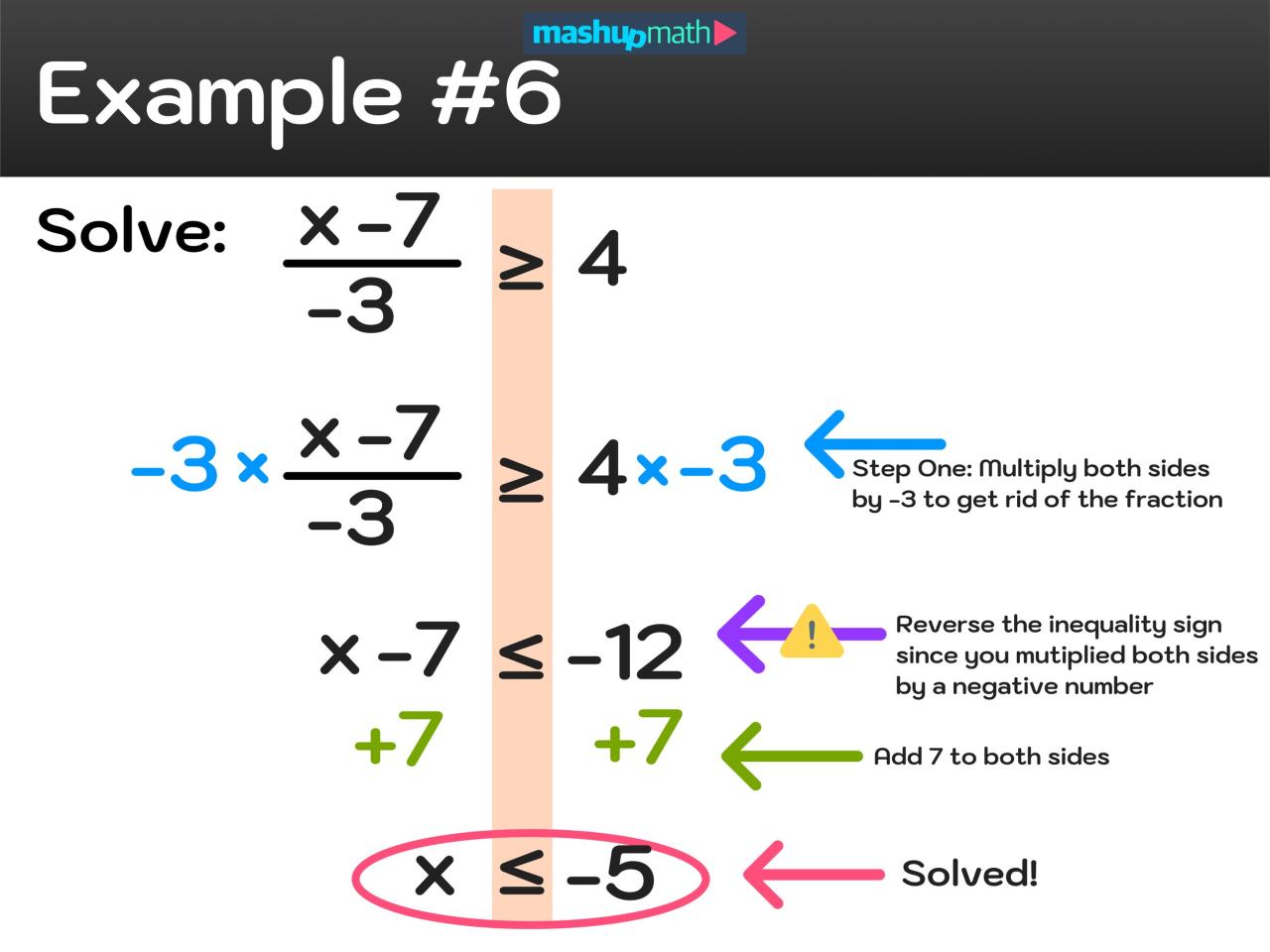
AI is rapidly transforming the landscape of problem-solving, and algebra is no exception. Leveraging advanced algorithms and machine learning, AI systems are capable of tackling complex algebraic problems with impressive accuracy and speed. This capability has the potential to significantly enhance educational experiences and aid researchers in various fields.AI systems excel at recognizing patterns and relationships within algebraic expressions, which are fundamental to solving equations and inequalities.
The ability to learn from examples allows these systems to refine their problem-solving strategies, improving their performance over time. This adaptability is crucial for handling the diverse range of algebraic problems encountered in various contexts.
Specific AI Algorithms Used
Various AI algorithms are employed for algebraic problem solving. These include symbolic regression algorithms, which identify mathematical relationships from data; neural networks, particularly recurrent neural networks (RNNs), capable of processing sequential data like algebraic expressions; and tree-based algorithms that can decompose problems into smaller, manageable steps. Each algorithm possesses unique strengths and weaknesses, leading to the development of hybrid approaches that combine the strengths of different algorithms to achieve optimal performance.
Role of Machine Learning
Machine learning plays a crucial role in automating algebraic problem-solving processes. By training AI models on vast datasets of algebraic problems and their solutions, these models can learn to recognize patterns, understand problem structures, and ultimately, generate accurate solutions. This process allows AI to mimic human reasoning in algebraic problem-solving, which is essential for adapting to different problem types and complexities.
Pattern Recognition in Algebraic Expressions
AI excels at identifying patterns and relationships within algebraic expressions. For instance, given a series of equations, AI can recognize common factors, identify variable dependencies, and determine the general structure of the equations. This pattern recognition capability enables AI to predict potential solutions and propose strategies for solving complex algebraic problems efficiently.
Learning from Examples and Improving Accuracy
AI systems are designed to learn from examples, significantly improving their problem-solving accuracy. As the system encounters more examples of algebraic problems and their solutions, it progressively refines its understanding of algebraic principles and strategies. This iterative process allows AI to adjust its approach to handle various problem types with increasing accuracy.
Comparison of AI Models
| AI Model Type | Strengths | Weaknesses | Suitable Algebraic Problem Types |
|---|---|---|---|
| Symbolic Regression | Identifies complex relationships, handles diverse data types | Can be computationally expensive, may not always provide interpretable solutions | Equation discovery, pattern finding, complex systems modeling |
| Neural Networks (RNNs) | Excellent at sequential data, can handle long expressions | May struggle with very complex or novel problems, potentially prone to overfitting | Solving equations with multiple steps, simplifying expressions |
| Decision Trees | Easy to interpret, efficient for simpler problems | May not perform well on complex algebraic problems, less effective at identifying intricate patterns | Basic equation solving, factoring simple expressions |
This table Artikels the strengths and weaknesses of different AI models in handling various algebraic problem types. Choosing the appropriate model depends on the specific characteristics of the problem.
Input and Output Formats for AI-Driven Solutions
AI systems excel at solving algebraic problems when presented with clear and structured input. The format of this input significantly impacts the AI’s ability to interpret the problem correctly and generate accurate, comprehensive solutions. Similarly, the output format needs to be designed for ease of understanding and utility. This section details the crucial aspects of input and output formats for AI-driven algebraic problem-solving.Effective communication is key for successful problem-solving with AI.
Clear and unambiguous input formats, coupled with comprehensible output formats, ensure accurate solutions and facilitate learning. This section will showcase diverse input formats for various algebraic problems and illustrate how AI systems generate clear and informative solutions.
Input Formats for Algebraic Problems
Clear input is essential for AI to understand and solve algebraic problems accurately. The format should explicitly define the problem, avoiding ambiguity. Different types of algebraic equations require slightly different input structures.
- For linear equations, input should clearly state the variables and their coefficients. For instance, an input like “Solve for x: 2x + 5 = 11” is well-structured and unambiguous. Inputs that omit critical elements like variables or operators will likely result in incorrect or incomplete solutions. Inputs should use standard mathematical notation.
- Quadratic equations require input that includes the quadratic term, linear term, and constant term. A well-structured input would be “Solve for x: 3x² + 2x – 8 = 0”. The AI should be able to distinguish between terms and their coefficients. Precise input avoids misinterpretations.
- Systems of equations benefit from a format that explicitly groups the equations. A suitable input format would be “Solve the system: 2x + y = 5, x – y = 2”. Grouping the equations makes it easier for the AI to process the system.
Output Formats for Algebraic Solutions
AI solutions should not only provide the answer but also a clear explanation of the steps involved. This transparency is critical for understanding the problem-solving process and aids in learning.
- Step-by-step explanations are crucial. The AI should present a clear sequence of steps, including the mathematical operations applied at each stage. For instance, for the equation “2x + 5 = 11”, the output should detail each step: 1. Subtract 5 from both sides, 2. Divide both sides by 2, 3.
Thus, x = 3.
- Symbolic representation of the solution is also important. The output should clearly show the algebraic expressions and variables involved in the process. For example, for “x² + 2x – 3 = 0,” the output should show the factorization or other methods employed to find the solution.
- Error handling is crucial. If the input is incorrect or ambiguous, the AI should provide a clear error message or explanation of the issue. This avoids misleading or incomplete solutions. Clear error messages help users identify and rectify their input.
Importance of Clear Input
The clarity and precision of input significantly influence the accuracy of the AI’s solution. Ambiguity in the input can lead to incorrect interpretations and, subsequently, erroneous results. For instance, a poorly formatted input like “2x+5=11” without specifying the variable or operation can lead to misunderstandings.
Example Table
| Input Type | Input Example | AI Output (Example) |
|---|---|---|
| Linear Equation | Solve for x: 4x – 7 = 9 |
1. Add 7 to both sides 4x = 16 2. Divide both sides by 4 x = 4 |
| Quadratic Equation | Solve for x: x² + 5x + 6 = 0 |
1. Factor the quadratic (x + 2)(x + 3) = 0 2. Set each factor to zero x + 2 = 0 or x + 3 = 0 3. Solve for x x = -2 or x = -3 |
| System of Equations | Solve the system: 3x + 2y = 7, x – y = 2 |
1. Solve the second equation for x x = y + 2 2. Substitute x in the first equation 3(y + 2) + 2y = 7 3. Simplify and solve for y y = 1 4. Substitute y = 1 in x = y + 2 x = 3 |
Advantages and Limitations of AI in Algebra
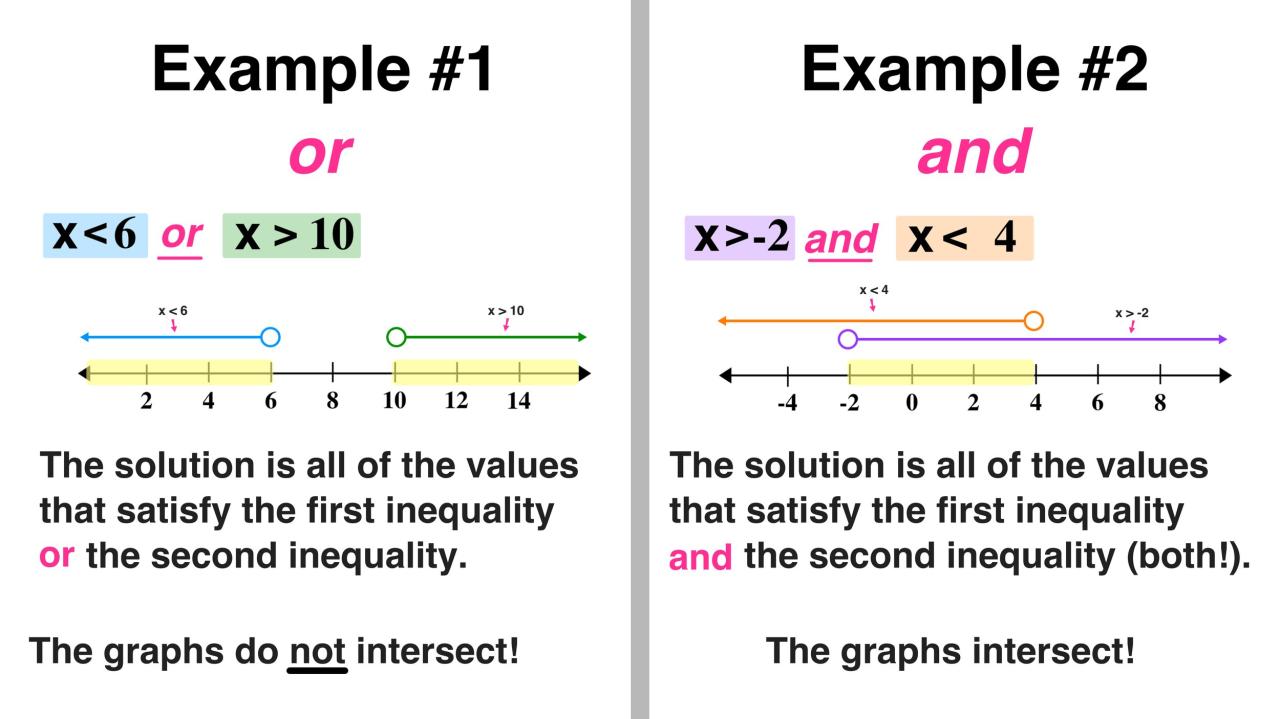
AI tools are rapidly transforming various fields, and algebraic problem-solving is no exception. These tools offer a unique approach to tackling complex mathematical problems, but it’s crucial to understand both their strengths and weaknesses. This section explores the advantages and limitations of leveraging AI for algebraic problem-solving, along with their potential impact on education and the challenges in interpreting and verifying their outputs.AI systems can process vast amounts of data and identify patterns that might be difficult for humans to discern.
This capability translates into potentially superior speed and efficiency in solving algebraic problems, particularly those involving intricate calculations or complex systems of equations. The potential impact on education and the learning of algebra is profound, offering personalized learning experiences and immediate feedback.
Advantages of Using AI for Algebraic Problem Solving
AI systems can analyze algebraic problems with remarkable speed and accuracy. They can identify patterns, relationships, and underlying structures in problems, enabling them to generate solutions that may be difficult or time-consuming for humans to find. This speed and accuracy are especially valuable in complex scenarios.
- Enhanced Speed and Efficiency: AI systems can process vast datasets and solve problems orders of magnitude faster than human mathematicians, accelerating the problem-solving process in various applications.
- Improved Accuracy: AI, when properly trained, can minimize errors associated with manual calculations, producing more accurate results in complex algebraic operations.
- Personalized Learning: AI-powered tools can adapt to individual student needs, providing tailored feedback and exercises, potentially enhancing the learning experience and improving comprehension.
- Handling Complex Problems: AI can effectively tackle intricate algebraic problems with multiple variables and complex equations that might overwhelm human solvers.
Limitations of Relying Solely on AI for Algebraic Problem Solving
While AI excels in certain aspects of algebraic problem-solving, it also possesses limitations. Relying solely on AI can hinder the development of crucial critical thinking and problem-solving skills in individuals. Moreover, the process of interpreting and verifying AI-generated solutions is essential to ensure their accuracy and validity.
- Lack of Conceptual Understanding: AI often generates solutions without providing a clear explanation of the underlying mathematical principles. This can hinder a student’s understanding of the concepts involved.
- Limited Power: AI’s output might not always offer a detailed explanation of the steps taken to arrive at the solution. This can make it difficult for users to understand the logic behind the solution, potentially hindering deeper understanding.
- Potential for Errors: While AI systems can be highly accurate, they are not immune to errors, especially if the training data contains inaccuracies or biases. Careful verification of the solutions is crucial.
- Over-Reliance and Skill Degradation: Over-reliance on AI tools for problem-solving can potentially diminish a user’s ability to develop their own problem-solving skills.
Impact on Education and Learning of Algebra
AI’s potential impact on algebra education is substantial. AI-powered tools can create personalized learning experiences, provide immediate feedback, and adapt to individual student needs. However, careful consideration of the potential drawbacks is crucial.
- Personalized Learning Experiences: AI can tailor educational content to specific student needs, adjusting difficulty levels and providing customized exercises, leading to more effective learning.
- Immediate Feedback: AI systems can offer instant feedback on student solutions, allowing for rapid identification of errors and areas needing improvement.
- Adaptive Learning Platforms: AI can create dynamic learning environments that adapt to student progress, ensuring a more engaging and effective learning experience.
Challenges in Interpreting and Verifying AI-Generated Algebraic Solutions
Interpreting and verifying AI-generated solutions is crucial to ensure their accuracy and validity. The black-box nature of some AI algorithms can make it challenging to understand the reasoning behind the solutions.
- Understanding the Reasoning Process: The lack of transparent reasoning behind AI’s solutions can make it difficult for users to identify errors or understand the underlying logic.
- Verification and Validation: Ensuring the accuracy and validity of AI-generated solutions necessitates careful verification using independent methods or comparing them to known solutions.
- Error Identification: Identifying and correcting errors in AI-generated solutions requires a deeper understanding of the mathematical principles involved and the potential limitations of the AI system.
Comparison of AI and Human Approaches
| Feature | AI | Human |
|---|---|---|
| Speed | High | Moderate |
| Accuracy | High (with proper training) | Variable |
| Cost-effectiveness | Potentially lower for large-scale tasks | Potentially lower for small-scale tasks |
Real-World Applications of AI in Algebra
AI’s ability to manipulate and solve algebraic equations is rapidly transforming various industries. This capability extends beyond theoretical problem-solving; it’s enabling practical applications in fields like engineering, finance, and scientific modeling, leading to more efficient and accurate outcomes. The integration of AI with algebraic problem-solving techniques unlocks new possibilities for streamlining complex calculations and developing sophisticated mathematical models.
Engineering Applications
AI-powered algebraic tools can significantly enhance engineering design and analysis. Consider a structural engineer designing a bridge. Complex equations govern the structural integrity of the bridge, including factors like material strength, load distribution, and environmental stresses. AI can swiftly analyze these equations, generating various design options and optimizing them for maximum strength and minimum material use. This automation accelerates the design process, reduces errors, and helps engineers explore a wider range of solutions.
Further, AI can model and simulate the bridge’s behavior under different load conditions, predicting its performance and ensuring safety.
Financial Modeling
Algebraic calculations are fundamental to financial modeling. AI can automate tasks such as portfolio optimization, risk assessment, and algorithmic trading. By analyzing vast datasets of market trends and financial instruments, AI can formulate intricate mathematical models that predict market fluctuations and optimize investment strategies. These models can incorporate numerous variables and complex relationships, going beyond the limitations of traditional methods.
Moreover, AI can quickly adjust to changing market conditions, ensuring that investment strategies remain relevant and profitable.
Scientific Modeling and Simulation
In scientific research, AI’s ability to solve algebraic problems plays a critical role in developing and refining mathematical models. For instance, in climate modeling, AI can analyze complex equations describing atmospheric dynamics, ocean currents, and greenhouse gas emissions. This allows scientists to create more accurate simulations of climate change impacts and explore potential mitigation strategies. Furthermore, AI can be employed in drug discovery, analyzing intricate chemical equations to predict the behavior of molecules and identify potential drug candidates.
This accelerates the process of identifying effective treatments and medicines.
Streamlining Complex Calculations in Various Industries
AI can significantly streamline complex algebraic calculations in various industries. Consider a manufacturing company optimizing production lines. AI can analyze equations describing production rates, material costs, and labor efficiency. By evaluating these equations, AI can determine optimal production schedules, minimize costs, and maximize efficiency. Such streamlining of complex calculations can be applied to a vast range of industries, including logistics, supply chain management, and resource allocation.
Table of Real-World Applications
| Application Area | Specific Functionality |
|---|---|
| Engineering Design | Analyzing structural integrity, optimizing designs, generating various design options, simulating bridge behavior under different load conditions. |
| Financial Modeling | Portfolio optimization, risk assessment, algorithmic trading, predicting market fluctuations, optimizing investment strategies. |
| Scientific Modeling | Analyzing complex equations in climate modeling, drug discovery, predicting molecular behavior, identifying potential drug candidates. |
| Manufacturing Optimization | Analyzing production rates, material costs, and labor efficiency, determining optimal production schedules, minimizing costs, maximizing efficiency. |
Practical Implementation and User Experience

AI tools offer a streamlined approach to solving algebraic problems, significantly enhancing the learning and problem-solving process. This section details the practical steps involved in utilizing these tools, outlining the user experience, and addressing potential troubleshooting steps. Understanding the accessibility and ease of use across different user groups is also crucial.The user experience is paramount in the adoption of AI tools.
A well-designed interface fosters a positive and productive interaction, ultimately increasing the tool’s effectiveness. A user-friendly interface will enable diverse learners to benefit from the AI assistance.
Steps Involved in Using AI Tools
AI tools for algebraic problem-solving typically involve a straightforward input process. Users input the algebraic problem, and the AI system processes it to generate a solution. This often involves a clear and concise input format, allowing users to effectively communicate their problem to the AI system.
- Problem Input: Users need to accurately and completely input the algebraic problem into the system. This includes specifying all variables, constants, and operators correctly.
- AI Processing: The AI system analyzes the inputted problem, identifying key components, and applying appropriate algorithms to derive a solution. This may involve symbolic manipulation, equation solving, or graph plotting.
- Output Interpretation: The AI system provides the solution in a comprehensible format, often including intermediate steps and explanations. This allows users to understand the problem-solving process.
User Interface and Experience
A user-friendly interface is crucial for seamless interaction with AI systems. The interface should clearly guide users through the process, providing feedback on input accuracy and solution clarity. Visual representations and interactive elements can enhance the user experience.
- Clear Input Fields: Input fields should be clearly labeled and formatted, making it easy for users to enter their problems. Providing examples or templates can aid in correct input.
- Intuitive Navigation: The interface should have intuitive navigation, enabling users to easily explore the tool’s features and functions.
- Visual Aids: Employing visual aids, such as graphs, diagrams, or symbolic representations, can enhance understanding of the problem and the solution process.
Troubleshooting Issues
Troubleshooting common issues is essential for maintaining a positive user experience. Clear error messages and helpful hints can guide users in rectifying input errors or interpreting results.
- Input Validation: The AI system should validate the input to ensure accuracy and completeness, providing specific error messages to guide users.
- Error Messages: Clear and informative error messages can help users identify and correct input errors or inconsistencies.
- Help Resources: Access to helpful resources, such as tutorials, FAQs, or contact support, is crucial for users facing difficulties.
Accessibility and Ease of Use
AI tools should be accessible to a wide range of users. A user-friendly interface, clear instructions, and appropriate support mechanisms ensure accessibility for various users.
- Simplified Language: The tool should utilize simple and clear language in its prompts, instructions, and explanations.
- Accessibility Features: Consider accessibility features such as text-to-speech, adjustable font sizes, and keyboard navigation for users with disabilities.
- Multiple Input Options: Offering multiple input options, such as typing, voice input, or image recognition, can enhance accessibility and ease of use.
Step-by-Step Guide
The following guide Artikels how to use an AI tool for algebraic problem-solving:
Step 1: Open the AI tool.
Step 2: Enter the algebraic problem into the designated input field. For example, enter “2x + 5 = 11”.
Step 3: Click the “Solve” button.
Step 4: Review the solution provided by the AI tool, including any intermediate steps.Step 5: If necessary, utilize the tool’s help resources to understand any unfamiliar concepts.
Last Word
In conclusion, this exploration of AI in algebra problem-solving reveals a powerful new tool with the potential to revolutionize how we approach mathematical challenges. While AI offers significant advantages in speed, accuracy, and potential scalability, it is crucial to understand its limitations and potential challenges. The integration of AI in education and various industries could lead to a more accessible and efficient understanding of algebra, while acknowledging the need for human oversight and critical evaluation of AI-generated solutions.